Bertrand Russell Quotes
The industrial revolution caused unspeakable misery both in England and in America … In the Lancashire cotton mills (from which Marx and Engels derived their livelihood), children worked from 12 to 16 hours a day; they often began working at the age of six or seven. Children had to be beaten to keep them from falling asleep while at work; in spite of this, many failed to keep awake and were mutilated or killed. Parents had to submit to the infliction of these atrocities upon their children, because they themselves were in a desperate plight. Craftsmen had been thrown out of work by the machines; rural labourers were compelled to migrate to the towns by the Enclosure Acts, which used Parliament to make landowners richer by making peasants destitute; trade unions were illegal until 1824; the government employed agents provocateurs to try to get revolutionary sentiments out of wage-earners, who were then deported or hanged. Such was the first effect of machinery in England.
3rd Earl Russell of Kingston
Bertrand Russell, 1872-1970, British Philosopher & Reformer, The Impact Of Science On Society
Sourced by: Eigen's Political and Historical Quotations


The coal miners’ strike had been going for 5 months. The major issue was the right to union recognition. The mine owners refused to do that and decided to take the strike. President Theodore Roosevelt mediated a settlement where the miners won more money but no union recognition. The great appeal and significance of this speech is that it stressed the young children who started working in the mines at ages 8 or 9 by working on the “breakers” where they broke up large chunks of coal into smaller chunks. The children never saw daylight and never had a chance for education much less a childhood. At the time, and well into the 20th century the Republican Party was adamantly opposed to any legislation regulating child labor and when two decades later public opinion finally forced Congress to pass Child Labor legislation, the Supreme Court declared it unconstitutional and it took a Constitutional Amendment. See {32240}, {642469}, and {36885}.

He called attention to the relationship between the poverty living conditions, sanitation, and the outbreak of cholera in the Manchester Cholera epidemic of 1832. He went on to advocate shorter working hours, better sanitation, and education for the mill workers.


She was writing about the textile mills of Manchester, England in the Industrial Revolution. Workers’ wages were so low that many of them could not feed themselves and their family decently


One steam engine, pulling a large plow by cables and manned by 5 or 6 workers could do the work of 20 horse drawn plows each requiring 1 worker. In addition all the workers who were needed to maintain the horses and clean up after them were also no longer required.


This was a description of the famous Lawrence, MA, textile mill strike.


Ten cents a day was a very low wage—it was about the equivalent of a meal at a tavern at the time. Workers throughout the country were outraged and give him a derogatory nickname—see Quotation 643585.


Debs had unconstitutionally been arrested and jailed for opposing American entry into World War I. He was later pardoned by President Warren G. Harding.

Jefferson was one of the first political and economic thinkers to express concern over the “wage slave” concept of the industrial revolution. This was one of the major reasons that he was not in consonance with Alexander Hamilton in his economic vision for America. While we followed the Hamilton direction, there are still issues of maintaining freedom and independence for an employee in modern nations and economies.


He in that same year then persuaded sympathetic MP, John Hobhouse, to introduce the first bill into the House of Commons regulating child labor in the mills. Considered radical in its day, forbade employment of children under the age of 9 from working in the mills, and then limited the hours that children from 9 to 18 to 12 hours a day. The bill was rejected with the same claims that have been made regarding child labor reform attempts ever since. It would slow growth, harm the economy, exacerbate the poverty of poor families and interfere with the parents right to bring up their children. It was not until after his death in 1861 that meaningful child labor laws were passed for the British mills.

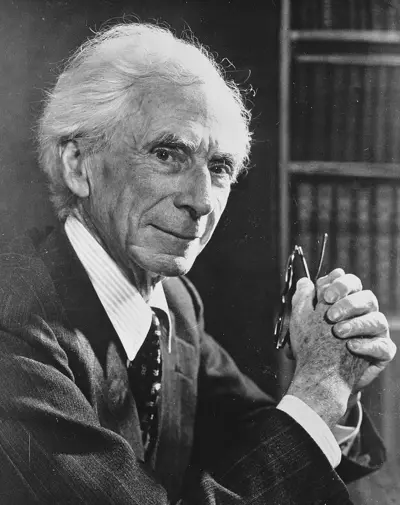
Bertrand Arthur William Russell, 3rd Earl Russell OM FRS was a British polymath, philosopher, logician, mathematician, historian, writer, social critic, political activist, and Nobel laureate. Bertrand Russell was one of the most influential and widely known intellectual figures of the twentieth century. In 1950 he was awarded the Nobel Prize in Literature for his extensive contributions to world literature and for his “rationality and humanity, as a fearless champion of free speech and free thought in the West.“
