Mary Heaton Vorse Quotes
Twenty thousand textile workers in Lawrence had walked out against a wage cut. It was a sudden, unplanned uprising. A fifty-four-hour week for women and children had been put into effect in Massachusetts, and the textile industry employed so many women and children that it meant a fifty-four-hour week for everyone. Consequently, there was a wage cut. It was a small cut, but it meant "four loaves of bread" to the workers.
This was a description of the famous Lawrence, MA, textile mill strike.
Mary Heaton Vorse, 1874-1966, Journalist, War Correspondent & Feminist, Newspaper Article Describing the Lawrence, MA, Textile Mill Strike, A Footnote to Folly
Sourced by: Eigen's Political and Historical Quotations

25,000 mill workers went on strike in one of the largest strikes in America at the time.


Muste raised money for the strikers and was soon made the executive secretary of the strike committee for 25,000 strikers. A. J. placed himself at the head of the picket line and was beat to exhaustion by the police and arrested. Several weeks into the strike, the police tried to provoke violence by lining up machine guns and having a labor spy urge the strikers to overcome them.


It was fairly common at the time for the management of a company undergoing a strike to hire goons and gunmen to beat up and even murdering strikers to intimidate the strikers. But some state and locall governments supporting private companies began to do that as well. Sometimes they even used the police and the state national guard.

Mitchell had warned that the strike was coming (see {607760}). The strike lasted 29 days and ended when the miners received a 10% wage increase. President Theodore Roosevelt mediated the dispute.
The coal miners’ strike had been going for 5 months. The major issue was the right to union recognition. The mine owners refused to do that and decided to take the strike. President Theodore Roosevelt mediated a settlement where the miners won more money but no union recognition. The great appeal and significance of this speech is that it stressed the young children who started working in the mines at ages 8 or 9 by working on the “breakers” where they broke up large chunks of coal into smaller chunks. The children never saw daylight and never had a chance for education much less a childhood. At the time, and well into the 20th century the Republican Party was adamantly opposed to any legislation regulating child labor and when two decades later public opinion finally forced Congress to pass Child Labor legislation, the Supreme Court declared it unconstitutional and it took a Constitutional Amendment. See {32240}, {642469}, and {36885}.


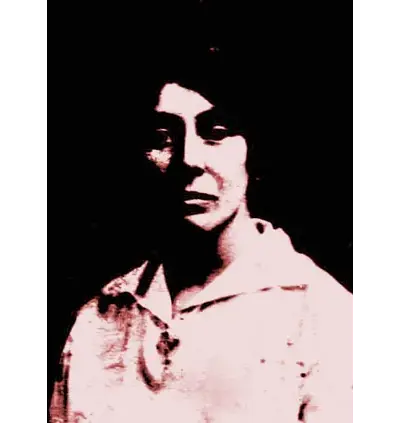
Mary Heaton Vorse O'Brien was an American journalist, labor activist, social critic, and novelist. She was outspoken and active in peace and social justice causes, such as women's suffrage, civil rights, pacifism (such as opposition to World War I), socialism, child labor, infant mortality, labor disputes, and affordable housing.
