Anton Pannekoek Quotes
The strongest form of fight against the capitalist class is the strike. Strikes are necessary, ever again, against the capitalists’ tendency to increase their profits by lowering wages and increase the hours or the intensity of work.
Anton Pannekoek, 1873-1960, Dutch Scientist & Philosopher, Theses On The Fight Of The Working Class Against Capitalism, 1947
Sourced by: Eigen's Political and Historical Quotations


Ford was then 74 years old and had become a very different man than in his youth when he was the hero of labor. He was very paranoid at this time. He even thought that financiers were actually backing the labor unions because their purpose was to go to war against Hitler who Ford greatly admired and supported. See {642379}. He claimed that the way they would do it is to fund the labor unions so most workers would join unions. This he thought would eliminate competition and lower workers’ wages. When workers’ wages were pushed low enough, the workers would demand American entry into the war to create government spending on armaments and a labor shortage to drive wages up again. There was not a single financier who was actually paying or lending any money to labor unions, and most industrialists other than Ford complained that labor unions would always demand higher wages. Ford’s son Edsel was the chief operating officer of Ford Motor Company, and did his best to work around his father to keep the company healthy and deal with a terrible labor relations problem his father caused.


While Ray was very sympathetic towards the strike, his father’s attitude was typical of that of business men across the nation. A picket line or demonstration was a “mob” and mobs should be broken up before they do physical damage to people or property. “Grape” and “canister” were types of ammunition for cannon that was used against personnel in war. One shell could kill 20-30 men in a crowd.


Roosevelt shocked the conservative members of his own party with this statement. Labor unions were not then an accepted concept in American society. Anti trust legislation and enforcement was in its infancy and companies in an industry commonly conspired as to price fixing, labor negotiations and market share allocations. TR had a scrupulous sense of fairness and equity.

At the time, it did seem impossible that labor and capital would ever have harmonious relations. But the notion that slavery would solve the problem is as preposterous as anything ever entered into the American political dialogue. But there were many in the South, and some in the North, who actually believed it. Even 150 years later, while labor and capital relations were much better than pre Civil War, they still could not be described as “harmonious” or “friendly”.

Ironically, this view was also held by many of the capitalist “Captains of American Industry” who believed that all unions were revolutionist regardless of the views of the union’s membership or leadership. Even today, there are some who still equate trade unionism with communism and revolution. The majority of the unions and the left never believed that, but the extreme communists and extreme capitalists did than and some do today.
He had squads of thugs that he would “rent” out to other gangsters for their enforcement activities and to unions to protect themselves from goons and intimidate non union workers. However, he would not let his men work as goons and strike busters or for companies—despite huge pay offers—to keep their workers in line, a common practice at the time.

Vladimir Lenin


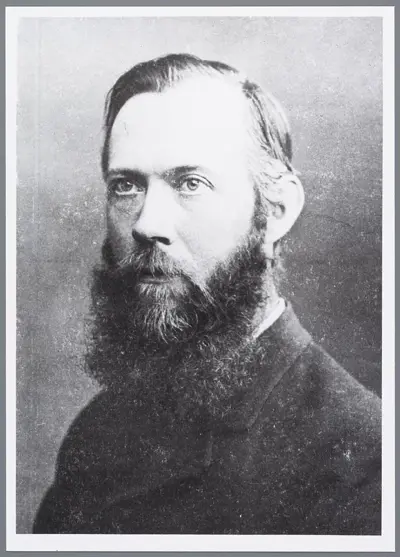
Antonie “Anton” Pannekoek was a Dutch astronomer, philosopher, Marxist theorist, and socialist revolutionary. He was one of the main theorists of council communism (Dutch: radencommunisme).
