Paul Lafargue Quotes
The boycott, which the bourgeoisie regards with sentimental tenderness when directed against the trade of its commercial rival, it considers as a crime when employed by the workers in defense of their livelihood.
Paul Lafargue, 1841-1911, Leader, French Workers Party, Son-in-law of Karl Marx, The Boycott, November 1901
Sourced by: Eigen's Political and Historical Quotations


This to some is a surprising statement for a Marxist, but Marxists have a wide range of political opinions just like Republicans, Christians, and Factor Owners do.

This was a great victory for the Victor Berger wing of the party. They purged the violence advocates and communists from the party. Despite this, a few right wingers call any socialist a communist and a revolutionary.


At the time, it did seem impossible that labor and capital would ever have harmonious relations. But the notion that slavery would solve the problem is as preposterous as anything ever entered into the American political dialogue. But there were many in the South, and some in the North, who actually believed it. Even 150 years later, while labor and capital relations were much better than pre Civil War, they still could not be described as “harmonious” or “friendly”.

Sinclair had written an expose of the meat packing industry – the Jungle – which used as its setting the Armour meat packing factory. It changed the way the public thought about the industry, the role of government and regulation. President Roosevelt took up the reform role, and got Congress to Regulate the quality and cleanliness of the meat packing industry. Sinclair, however not only wanted that reform, but also wanted the labor wages and conditions reformed. He referred to the Armour plant as the fortress.


Comintern was upset by the American Socialist Party because the party had rejected the 21 Conditions for Affiliation and withdrew their intent to join the Third International. To Comintern, the Socialist Party was a party of “bourgeois socialism.”


This quotation and other material were so radical and inflammatory that Calhoun wrote and published this anonymously.

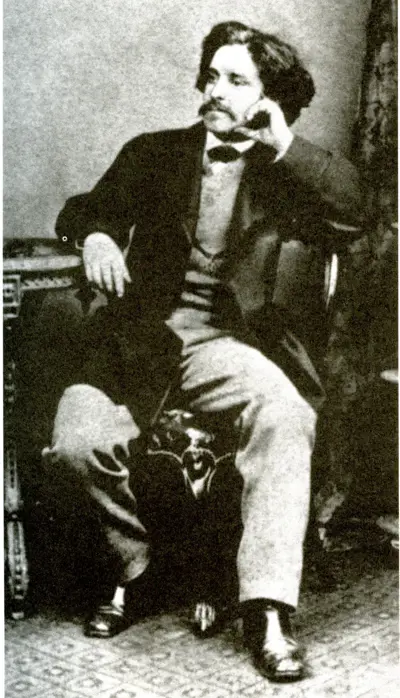
Paul Lafargue was a French revolutionary Marxist socialist, political writer, journalist, literary critic, and activist; he was Karl Marx's son-in-law having married his second daughter, Laura. His best known work is The Right to Be Lazy. Born in Cuba to French and Creole parents, Lafargue spent most of his life in France, with periods in England and Spain. At the age of 69, he and 66-year-old Laura died together by a suicide pact.
