Richard Oastler Quotes
Very often the children are awakened by the parents at four in the morning. They are pulled out of bed when almost asleep. The younger children are carried on the backs of the older children asleep to the mill, and they see no more of their parents till they go home at night, and are sent to bed.
Richard Oastler, *-1861, English Child Labor Reformer, Speech July 7, 1832
Sourced by: Eigen's Political and Historical Quotations

He in that same year then persuaded sympathetic MP, John Hobhouse, to introduce the first bill into the House of Commons regulating child labor in the mills. Considered radical in its day, forbade employment of children under the age of 9 from working in the mills, and then limited the hours that children from 9 to 18 to 12 hours a day. The bill was rejected with the same claims that have been made regarding child labor reform attempts ever since. It would slow growth, harm the economy, exacerbate the poverty of poor families and interfere with the parents right to bring up their children. It was not until after his death in 1861 that meaningful child labor laws were passed for the British mills.

He called attention to the relationship between the poverty living conditions, sanitation, and the outbreak of cholera in the Manchester Cholera epidemic of 1832. He went on to advocate shorter working hours, better sanitation, and education for the mill workers.

This report and others like it eventually led to French labor reforms, but only many years later.
Oastler was a mill owner himself.


The Supreme Court had ruled that the Constitution prohibited the Federal Government from regulating conditions of child labor. A Constitutional amendment was passed by Congress and submitted to the States for ratification. That amendment is still the legal basis for all the Federal involvement in child labor. However there were many opponents. The idea of telling an employer that he could not work an 8 year old child for 14 hours a day was actually considered Communistic by some right wing elements. This quotation is famous for two reasons: First, it illustrates the extreme view against any kind of regulation of business that a strong minority held at the time. Second, this was a statement by a Roman Catholic Cardinal. The Catholic has generally been one of the progressive forces for labor reform (with the exception of racial discrimination and slavery) in the United States. Most modern Catholics are very surprised that a Cardinal actually issued such a Pastoral Letter—especially since he had been progressive on other issues {627510}.
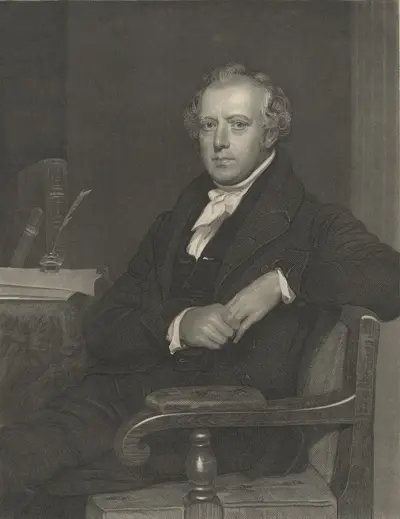
Richard Oastler "the Factory King" was a "Tory radical", an active opponent of Catholic Emancipation and Parliamentary Reform and a lifelong admirer of the Duke of Wellington; but also an abolitionist and prominent in the "anti-Poor Law" resistance to the implementation of the "New Poor Law" of 1834. Most notably, as his sobriquet indicates, he was at the heart of the campaign for a ten-hour working day in its early years: although less so by the time of its successful culmination in the Factories Act 1847, he retained the sobriquet.
