LAWRENCE SUMMERS
(Lawrence Henry Summers)
Both of these programs have been amongst the most popular programs in American History. Yet for Republican conservatives at the beginning of the 21st century, these were programs that they wanted to either terminate of alter in such severe manners that they would not be anything like the original programs. When these programs were passed by Congress, most Republicans were opposed to the legislation but enough were supportive to have bipartisan support. However, by 2000, most liberal Republicans had been driven out of the party, and it was the Democrats who kept the programs alive and in force despite the Republican assaults. The Democrats had public opinion on their side on these battles and even most registered Republicans opposed President George W. Bush’s major attempt to privatize Social Security.
Born thought that her agency was responsible for regulating the new esoteric financial products—derivatives including credit default swaps—for otherwise there would be no regulation at all of financial products that could dwarf the stock and bond market. Summers persuaded her to back off. When the Meltdown of 2008 hit, the huge derivative exposure of the large banks and some insurance companies was so great that it was one of the major causes for the meltdown of the entire banking system. Summers, normally a great economist not only called this one wrong, but later, along with most other government and private economists ignored a very explicit warning—See {637168}, {637986}, and {620038}.
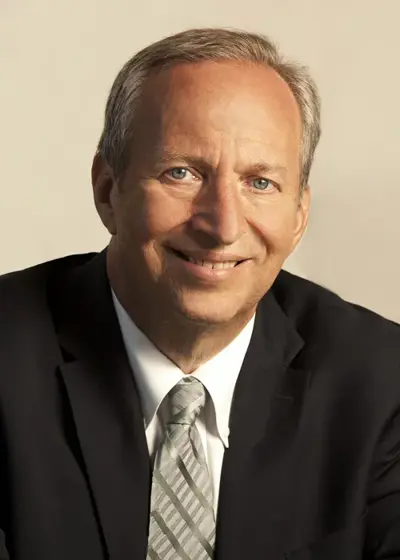
Lawrence Henry Summers is an American economist, former Vice President of Development Economics and Chief Economist of the World Bank (1991–93), senior U.S. Treasury Department official throughout President Clinton's administration (ultimately Treasury Secretary, 1999–2001), and former director of the National Economic Council for President Obama (2009–2010). He is a former president of Harvard University (2001–2006), where he is currently (as of March 2017) a professor and director of the Mossavar-Rahmani Center for Business and Government at Harvard's Kennedy School of Government.
