Robert Owen Quotes
It is not to be supposed that children so young could remain, with the intervals of meals only, from six in the morning until seven in the evening, in constant employment, on their feet, within cotton mills, and afterwards acquire much proficiency in education.
Robert Owen, 1771-1858, Welsh Social Reformer, A New View of Society, Second Essay
Sourced by: Eigen's Political and Historical Quotations


Oastler was a mill owner himself.


Executed by the English for his part in the Easter Uprising. In the late 19th century the 12 hour work day was typical and it was 6 days a week. To reform labor hours it was not enough to argue the effect on the individual and the family. It had to be argued as a solution to the unemployment problem as well.


This report and others like it eventually led to French labor reforms, but only many years later.


This is a particularly important quotation. The American Socialists were very clear as to what Socialism was and what it was not. One of the favorite and successful tactics of Conservatives in America was to label any reform that they were opposed to as Socialist or Communist during the Red Scare. 100 years after this was published, the same technique was used. When Barack Obama was elected President, the Republican opposition to most of his reforms almost always began with the accusation that the reform was Socialist and many of the conservatives called Obama himself a Socialist. They had head the term applied to anything progressive for so long that they didn’t really know what Socialism was. This quotation makes it very clear. The “Night Riders” were the KKK and others who would lynch, murder and torture Blacks. The favorite claim of Southern segregationists was that any attempt at ending segregation was Socialist or Communist. That worked until the passage of the 1963 Civil Rights Act.
This is one of the earliest calls for the 8 hour work day.


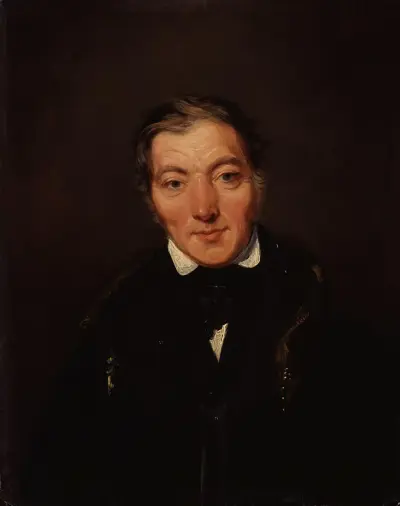
Robert Owen, a Welsh textile manufacturer, philanthropist and social reformer, was one founder of utopian socialism and the cooperative movement. He is known for efforts to improve factory working conditions for his workers and promote experimental socialistic communities. In the early 1800s, he became wealthy as an investor and eventual manager of a large textile mill at New Lanark, Scotland. He had initially trained as a draper in Stamford, Lincolnshire, and worked in London before relocating aged 18 to Manchester and becoming a textile manufacturer. In 1824, Owen travelled to America and invested most of his fortune in an experimental socialistic community at New Harmony, Indiana, a preliminary model for Owen's Utopian society. It lasted about two years; other Owenite Utopian communities met similar fates. In 1828, Owen returned to settle in London, where he continued to champion the working class, led the development of cooperatives and the trade union movement, and supported the passage of child labour laws and free co-educational schools.
