Robert Owen Quotes
Eight hours daily labor is enough for any human being
This is one of the earliest calls for the 8 hour work day.
Robert Owen, 1771-1858, Welsh Social Reformer, Society for Promoting National Regeneration, 1833
Sourced by: Eigen's Political and Historical Quotations


Executed by the English for his part in the Easter Uprising. In the late 19th century the 12 hour work day was typical and it was 6 days a week. To reform labor hours it was not enough to argue the effect on the individual and the family. It had to be argued as a solution to the unemployment problem as well.


The U. S. Senate had deteriorated to the point where Senators were only working 3 days per week—Tuesday through Thursday. The Senators would spend the other 4 days in their home states—usually raising money for the next election where millions of dollars will be needed.

At the time, the mine owners and operators claimed that they had NO obligations to their workers—not even to ensure a safe mine. There was no OSHA and workers died and were maimed on the job much more frequently than they do today. Many mine owners now accept that they have obligations to the workers, and the rest are required to have responsible and safe working conditions by law and OSHA regulations.

At the time, 10 and 12 hour work days were common throughout the country and a movement had started to shorten the work day by legislation. Overtime payment over 8 hours was the eventual solution.


The French solution to their high unemployment problem was to mandate a 35 hour workweek and ban overtime. The effect on business was to dramatically increase the percentage that the employer has to pay for fringe benefits. This raised the cost of labor and along with the French tradition of not working very hard. The economy weakened and the unemployment rate was still very high.

Workers must be paid promptly.


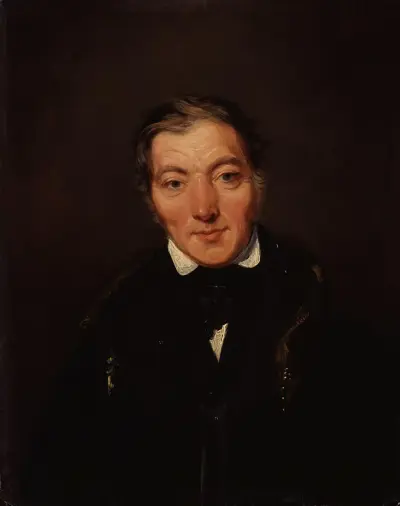
Robert Owen, a Welsh textile manufacturer, philanthropist and social reformer, was one founder of utopian socialism and the cooperative movement. He is known for efforts to improve factory working conditions for his workers and promote experimental socialistic communities. In the early 1800s, he became wealthy as an investor and eventual manager of a large textile mill at New Lanark, Scotland. He had initially trained as a draper in Stamford, Lincolnshire, and worked in London before relocating aged 18 to Manchester and becoming a textile manufacturer. In 1824, Owen travelled to America and invested most of his fortune in an experimental socialistic community at New Harmony, Indiana, a preliminary model for Owen's Utopian society. It lasted about two years; other Owenite Utopian communities met similar fates. In 1828, Owen returned to settle in London, where he continued to champion the working class, led the development of cooperatives and the trade union movement, and supported the passage of child labour laws and free co-educational schools.
