Fiorello H. La Guardia Quotes
This is 1930, not 1898. We have not only arrived at a 44-hour week but in this machine age we are arriving at the time when all workers will soon be given a 40-hour week.
Fiorello H. La Guardia, 1882-1947, U. S. Congressman (Republican & Socialist, NY), New York City Mayor (Republican and Fusion Party), Speech, Congress, July 1, 1930
Sourced by: Eigen's Political and Historical Quotations

The left has always been ambivalent about automation. Many object to it on the grounds that it puts men out of work. However, others such as Lafage, argued that automation was the only economic way to reform the working hours and conditions of labor. The problem at the time was that as long as labor was so cheap, there was no motivation for the manufacturer to invest in better machinery. He and many others argued that minimum wages and their increases increase productivity because it would force manufacturers to invest in more productive equipment to reduce their labor costs.

This is one of the earliest calls for the 8 hour work day.

Executed by the English for his part in the Easter Uprising. In the late 19th century the 12 hour work day was typical and it was 6 days a week. To reform labor hours it was not enough to argue the effect on the individual and the family. It had to be argued as a solution to the unemployment problem as well.

These work hours, 6 days a week were typical for Russian workers of the time. The Russian workers were ripe for any revolution or reform that promised a better life.

Steel workers were then paid $1.75 for a 9 hour day. This was earthshaking.


Labor reform was a burning issue in most of the industrialized countries of the world. The two areas that legislation was under consideration all over were working hours and child labor. There were no overtime provisions, employers were free to require workers to work 7 days for as many hours as they wanted. There were no limitations on the use of child labor. This is one of the classic conservative oppositions to these reforms. Ironically to us today, those against reform argued that it was disrespectful of the working man to take away his freedom to work whatever hours he so chose, and it was disrespectful of the workers role as a head of family to decide for him when and under what conditions his children could work. Germany at the time was a very dramatic example of the struggle as the Chancellor was opposed to all labor reform and Kaiser Wilhelm II felt that reforms were needed. The two most powerful Germans were split on this issue as were people in most countries.

The government of the United States, even as late as the 2nd decade of the 21st century, still had not solved this problem.


Jefferson was one of the first political and economic thinkers to express concern over the “wage slave” concept of the industrial revolution. This was one of the major reasons that he was not in consonance with Alexander Hamilton in his economic vision for America. While we followed the Hamilton direction, there are still issues of maintaining freedom and independence for an employee in modern nations and economies.

This was a description of the famous Lawrence, MA, textile mill strike.

Coolidge was extremely pro business. See {598686}.
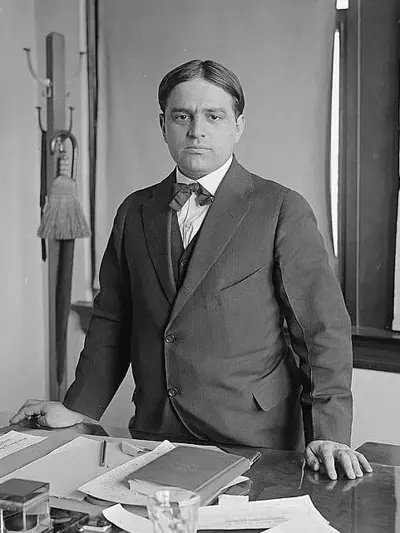
Fiorello Henry La Guardia was an American attorney and politician who represented New York in the House of Representatives and served as the 99th Mayor of New York City from 1934 to 1945. Known for his irascible, energetic, and charismatic personality and diminutive stature, La Guardia is acclaimed as one of the greatest mayors in American history. Though a Republican, La Guardia was frequently cross-endorsed by other parties, including the rival Democratic Party, under New York's electoral fusion laws.
