Louis MacNeice Quotes
We are all fed from hundreds and thousands of hands. Often we do not know whose they are nor how they work. Only a few of us ever visualize the hands that grope in the coal mines or push levers in the mills or handle axes in the lumber camp.
MacNeice, Louis. The Strings Are False: An Unfinished Autobiography. Faber and Faber, 1965.


Coolidge was extremely pro business. See {598686}.


Executed by the English for his part in the Easter Uprising. In the late 19th century the 12 hour work day was typical and it was 6 days a week. To reform labor hours it was not enough to argue the effect on the individual and the family. It had to be argued as a solution to the unemployment problem as well.


The left has always been ambivalent about automation. Many object to it on the grounds that it puts men out of work. However, others such as Lafage, argued that automation was the only economic way to reform the working hours and conditions of labor. The problem at the time was that as long as labor was so cheap, there was no motivation for the manufacturer to invest in better machinery. He and many others argued that minimum wages and their increases increase productivity because it would force manufacturers to invest in more productive equipment to reduce their labor costs.
These work hours, 6 days a week were typical for Russian workers of the time. The Russian workers were ripe for any revolution or reform that promised a better life.


Ten cents a day was a very low wage—it was about the equivalent of a meal at a tavern at the time. Workers throughout the country were outraged and give him a derogatory nickname—see Quotation 643585.


In 1877 Wasburn was dropped from the List of Ministers by the Unitarian Church. He had become quite atheistic.

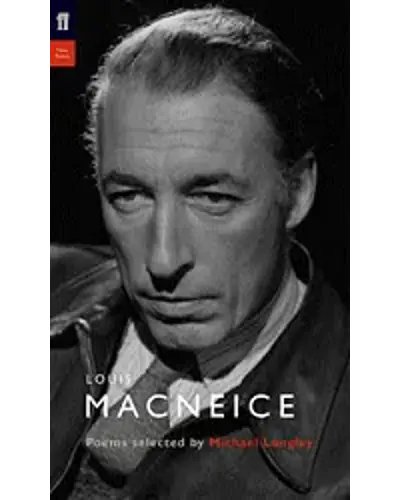
Frederick Louis MacNeice CBE was an Irish poet and playwright from Northern Ireland, and a member of the Auden Group, which also included W. H. Auden, Stephen Spender and Cecil Day-Lewis. MacNeice's body of work was widely appreciated by the public during his lifetime, due in part to his relaxed but socially and emotionally aware style. Never as overtly or simplistically political as some of his contemporaries, he expressed a humane opposition to totalitarianism as well as an acute awareness of his roots.
