Leland Stanford Quotes
It is probable that for a long time to come the mass of mankind in civilized countries will find it both necessary and advantageous to labor for wages, and to accept the condition of hired laborers.
Stanford, Leland. Co-operation of Labor: Speech of Hon. Leland Stanford of California in the Senate of the United States, February 16, 1887. Washington: Government Printing Office, 1887.


Jefferson was one of the first political and economic thinkers to express concern over the “wage slave” concept of the industrial revolution. This was one of the major reasons that he was not in consonance with Alexander Hamilton in his economic vision for America. While we followed the Hamilton direction, there are still issues of maintaining freedom and independence for an employee in modern nations and economies.

the Bolshevik Communists of Russia Zenzinov was often a critic of the Bolsheviks.


Executed by the English for his part in the Easter Uprising. In the late 19th century the 12 hour work day was typical and it was 6 days a week. To reform labor hours it was not enough to argue the effect on the individual and the family. It had to be argued as a solution to the unemployment problem as well.

Sinclair had written an expose of the meat packing industry – the Jungle – which used as its setting the Armour meat packing factory. It changed the way the public thought about the industry, the role of government and regulation. President Roosevelt took up the reform role, and got Congress to Regulate the quality and cleanliness of the meat packing industry. Sinclair, however not only wanted that reform, but also wanted the labor wages and conditions reformed. He referred to the Armour plant as the fortress.

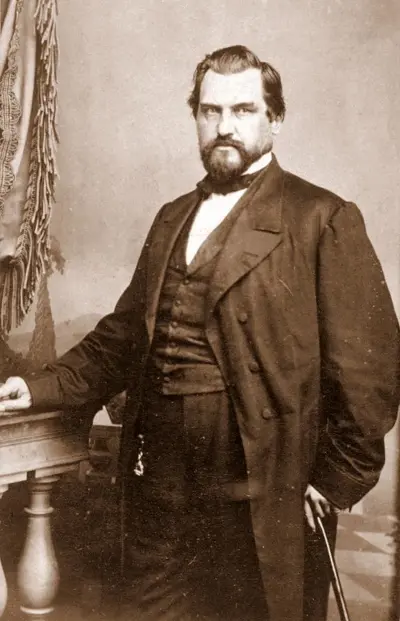
Amasa Leland Stanford was an American industrialist and politician. He was the founder (with his wife, Jane) of Stanford University. Migrating to California from New York at the time of the Gold Rush, he became a successful merchant and wholesaler, and continued to build his business empire. He spent one two-year term as Governor of California after his election in 1861, and later eight years as a United States Senator. As president of Central Pacific Railroad, beginning in 1861, and later Southern Pacific, he had tremendous power in the region and a lasting impact on California. He is widely considered a robber baron.
