Daniel De Leon Quotes
It cannot be too strongly insisted that Socialism means but one thing, and that is the abolition of capital in private hands, and the turning over of the industries into the direct control of the workmen employed in them. Anything else is not Socialism, and has no right to sail under that name. Socialism is not the establishment of an eight-hour day, not the abolition of child labor, not the enforcement of the pure food laws, not the putting down of the Night Riders, or the enforcement of the 80-cent gas law. None of these, nor all of them together, are Socialism. They might all be done by the government tomorrow, and still we would not have Socialism. They are merely reforms of the present system.
This is a particularly important quotation. The American Socialists were very clear as to what Socialism was and what it was not. One of the favorite and successful tactics of Conservatives in America was to label any reform that they were opposed to as Socialist or Communist during the Red Scare. 100 years after this was published, the same technique was used. When Barack Obama was elected President, the Republican opposition to most of his reforms almost always began with the accusation that the reform was Socialist and many of the conservatives called Obama himself a Socialist. They had head the term applied to anything progressive for so long that they didn’t really know what Socialism was. This quotation makes it very clear. The “Night Riders” were the KKK and others who would lynch, murder and torture Blacks. The favorite claim of Southern segregationists was that any attempt at ending segregation was Socialist or Communist. That worked until the passage of the 1963 Civil Rights Act.
Daniel De Leon, 1852–1914, Leader if the Socialist Labor Party, "The Daily People" editorial, "Trimming the Poodle", November 2, 1908
Sourced by: Eigen's Political and Historical Quotations


Sinclair had written an expose of the meat packing industry – the Jungle – which used as its setting the Armour meat packing factory. It changed the way the public thought about the industry, the role of government and regulation. President Roosevelt took up the reform role, and got Congress to Regulate the quality and cleanliness of the meat packing industry. Sinclair, however not only wanted that reform, but also wanted the labor wages and conditions reformed. He referred to the Armour plant as the fortress.

First Mormon Cabinet Member


Most Americans looked at anarchists as communists. They generally were not, and opposed state communism as much as state capitalism. In many ways they distrusted government the way some modern libertarians do.


This quotation illustrates White’s favorable view of Russia. Note his use of the “it works” phrase which he picked up from Stefens’ famous quote {634892}. At the time the Soviet Union had been perceived by many economists to have been a great economic improvement over Czarist Russia. And over all, Russia which in 1917 was an economic basket case, had become one of the stronger states in Europe although the Russian people paid a horrendous price. Most historians agree that White passed classified information to the Russians. He was accused of being a Communist, but there was never any evidence of that. Some people believe that he was a spy for the Russians and committed espionage, but others disagree observing that White was very much his own man and felt that much information that was classified never should have been. White substituted his own judgment, it is believed, about what could be given to the Russians for the security system. He was an admirer of what Russian socialism had accomplished economically, educationally and medically since the 1917 revolution deposing the Czar. Russia had been a valuable military ally, which had taken the brunt of both military and civilian casualties in WWII. White’s economics were certainly not Marxist but very much Keynesian. He was subpoenaed by the House Un-American Activities Committee where he was accused of being a Communist which he denied (see {634907}). He died of a heart attack 3 days later.

At the time extreme socialist doctrine was that the state should own the factories and the other means of industrial production. The socialists believed that the people through their government had to be able to control the economy and the private owners’ greed would always drive the economy for themselves and not for the society in general. Deal was one of the first who argued that there were other, less draconian modes of economic control like government regulation and central banks. Deat turned traitor during WWII and served in the Vichy Nazi cabinet of Pierre Laval. He was sentenced to death for treason but escaped to Italy where he assumed a new identity and then was sheltered by a right-wing Catholic religious order in the convent of San Vito, near Turin, where he wrote his memoirs and lived undiscovered until his death.


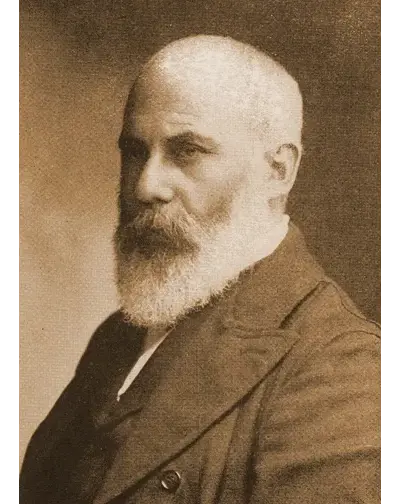
Daniel De Leon (/də ˈliːɒn/; December 14, 1852 – May 11, 1914), alternatively spelt Daniel de León, was a Curaçaoan-American socialist newspaper editor, politician, Marxist theoretician, and trade union organizer. He is regarded as the forefather of the idea of revolutionary industrial unionism and was the leading figure in the Socialist Labor Party of America from 1890 until the time of his death.[2] De Leon was a co-founder of the Industrial Workers of the World and much of his ideas and philosophy contributed to the creations of Socialist Labor parties across the world, including: Australia, the United Kingdom, Canada, and the Socialist Trade and Labor Alliance.
