Marcel Deat Quotes
Ownership of the means of production was an obsession to be abandoned. What mattered was the state’s control over the economy.
At the time extreme socialist doctrine was that the state should own the factories and the other means of industrial production. The socialists believed that the people through their government had to be able to control the economy and the private owners’ greed would always drive the economy for themselves and not for the society in general. Deal was one of the first who argued that there were other, less draconian modes of economic control like government regulation and central banks. Deat turned traitor during WWII and served in the Vichy Nazi cabinet of Pierre Laval. He was sentenced to death for treason but escaped to Italy where he assumed a new identity and then was sheltered by a right-wing Catholic religious order in the convent of San Vito, near Turin, where he wrote his memoirs and lived undiscovered until his death.
Marcel Deat, 1894–1955, French Socialist Politician, Perspectives Socialistes, 1930
Sourced by: Eigen's Political and Historical Quotations


This quotation illustrates White’s favorable view of Russia. Note his use of the “it works” phrase which he picked up from Stefens’ famous quote {634892}. At the time the Soviet Union had been perceived by many economists to have been a great economic improvement over Czarist Russia. And over all, Russia which in 1917 was an economic basket case, had become one of the stronger states in Europe although the Russian people paid a horrendous price. Most historians agree that White passed classified information to the Russians. He was accused of being a Communist, but there was never any evidence of that. Some people believe that he was a spy for the Russians and committed espionage, but others disagree observing that White was very much his own man and felt that much information that was classified never should have been. White substituted his own judgment, it is believed, about what could be given to the Russians for the security system. He was an admirer of what Russian socialism had accomplished economically, educationally and medically since the 1917 revolution deposing the Czar. Russia had been a valuable military ally, which had taken the brunt of both military and civilian casualties in WWII. White’s economics were certainly not Marxist but very much Keynesian. He was subpoenaed by the House Un-American Activities Committee where he was accused of being a Communist which he denied (see {634907}). He died of a heart attack 3 days later.


This was the first use of the word “socialism”.


One of the contradictions of capitalism is that at many points in history capitalism has caused and/or contributed to great death and suffering. However, that same capitalism has led to the development of science, technology, agronomy, medicine and education which has saved and preserved millions of lives and raised the standard of living more than anything else.


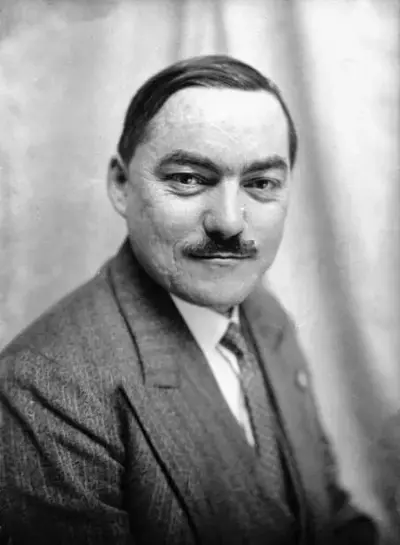
Marcel Déat was a French politician. Initially a socialist and a member of the French Section of the Workers' International (SFIO), he led a breakaway group of right-wing 'Neosocialists' out of the SFIO in 1933. During the occupation of France by Nazi Germany, he founded the collaborationist National Popular Rally (RNP). In 1944, he became Minister of Labour and National Solidarity in Pierre Laval's government in Vichy, before escaping to the Sigmaringen enclave along with Vichy officials after the Allied landings in Normandy. Condemned in absentia for collaborationism, he died while still in hiding in Italy.
