Robert Owen Quotes
Train any population rationally, and they will be rational. Furnish honest and useful employments to those so trained, and such employments they will greatly prefer to dishonest or injurious occupations. It is beyond all calculation the interest of every government to provide that training and that employment; and to provide both is easily practicable.
Robert Owen, 1771-1858, Welsh Social Reformer, A New View of Society, ~1815
Sourced by: Eigen's Political and Historical Quotations


Announcing a large gift to the United Negro College Fund:


This is one of the strongest statement of the importance of child rearing and education ever made.

In any significant change of public policy including public investments, some will benefit more than others, and some interests will be harmed. Unless the politician is willing to face this reality there will be little or no progress. Bloomberg invested a great deal in improving air quality of the city, but there were some companies who had to pay more to reduce their pollution.


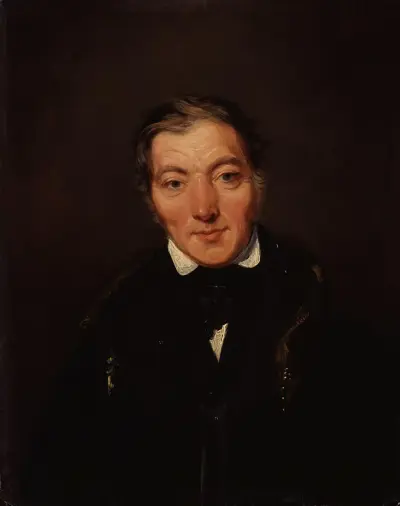
Robert Owen, a Welsh textile manufacturer, philanthropist and social reformer, was one founder of utopian socialism and the cooperative movement. He is known for efforts to improve factory working conditions for his workers and promote experimental socialistic communities. In the early 1800s, he became wealthy as an investor and eventual manager of a large textile mill at New Lanark, Scotland. He had initially trained as a draper in Stamford, Lincolnshire, and worked in London before relocating aged 18 to Manchester and becoming a textile manufacturer. In 1824, Owen travelled to America and invested most of his fortune in an experimental socialistic community at New Harmony, Indiana, a preliminary model for Owen's Utopian society. It lasted about two years; other Owenite Utopian communities met similar fates. In 1828, Owen returned to settle in London, where he continued to champion the working class, led the development of cooperatives and the trade union movement, and supported the passage of child labour laws and free co-educational schools.
