Arthur Schopenhauer Quotes
At the age of five years to enter a spinning-cotton or other factory, and from that time forth to sit there daily, first ten, then twelve, and ultimately fourteen hours, performing the same mechanical labor, is to purchase dearly the satisfaction of drawing breath. But this is the fate of millions, and that of millions more is analogous to it.
It is hard for us today to appreciate the 17th-20th centuries elites’ intense focus on child labor, but the abuses were horrible. Men and women like Schopenhauer would personally observe them every day. These quotes give us a historical feel for that issue, There has been so much reform, that almost all the abuses in modern times are in poorer countries which we do not get to see or experience—especially in the way that Schopenhauer did.
Arthur Schopenhauer, 1788-1860, German Philosopher, On the Vanity and Suffering of Life
Sourced by: Eigen's Political and Historical Quotations


Oastler was a mill owner himself.

This report and others like it eventually led to French labor reforms, but only many years later.


3rd Earl Russell of Kingston


He in that same year then persuaded sympathetic MP, John Hobhouse, to introduce the first bill into the House of Commons regulating child labor in the mills. Considered radical in its day, forbade employment of children under the age of 9 from working in the mills, and then limited the hours that children from 9 to 18 to 12 hours a day. The bill was rejected with the same claims that have been made regarding child labor reform attempts ever since. It would slow growth, harm the economy, exacerbate the poverty of poor families and interfere with the parents right to bring up their children. It was not until after his death in 1861 that meaningful child labor laws were passed for the British mills.


In the Jim Crow era and well into the 20th century, many school books and historians, wanting to minimize the enmity between North and South, tended to a historical revisionism where the real brutal and immoral edge of slavery was minimized and slave owners were depicted as being in error by modern standards but well-meaning and paternalistic. Foner, with this famous quotation, put the lie to the false image of paternalistic slavery. By the beginning of the 21st century, there were very few serious historians who still tried to characterize slavery in the South as “paternalistic” otherwise humane. See {584014} for another of Foner’s famous quotes regarding slavery

At the time many people worked 60 hours a week and those on piece work to make ends meet worked much longer.


He called attention to the relationship between the poverty living conditions, sanitation, and the outbreak of cholera in the Manchester Cholera epidemic of 1832. He went on to advocate shorter working hours, better sanitation, and education for the mill workers.
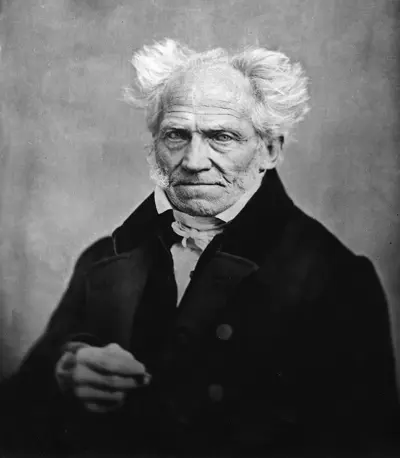
Arthur Schopenhauer was a German philosopher. He is best known for his 1818 work The World as Will and Representation (expanded in 1844), which characterizes the phenomenal world as the product of a blind and insatiable noumenal will. Building on the transcendental idealism of Immanuel Kant, Schopenhauer developed an atheistic metaphysical and ethical system that rejected the contemporaneous ideas of German idealism. He was among the first thinkers in Western philosophy to share and affirm significant tenets of Indian philosophy, such as asceticism, denial of the self, and the notion of the world-as-appearance. His work has been described as an exemplary manifestation of philosophical pessimism.
