William Thomas Stead Quotes
The people of Pullman are destitute and starving. Over five thousand human beings are in dire necessity, and appeal to the liberal minded people of Chicago for help. Their unfortunate condition is due to no fault of theirs. They have been noted for their thrift, sobriety, and industry. The fault lies in the hard times and a hard taskmaster.... They have struck against a slavery worse than that of the negroes of the South. They, at least, were well fed and well cared for, while the white slaves of Pullman, worked they ever so willingly, could not earn enough to clothe and feed themselves decently--hardly enough to keep body and soul together. Now that they have struck for a living wage, they find themselves penniless, with gaunt famine and despair staring them in the face.... Help them as you wished to be helped in the hour of affiliation. Their cause is the cause of humanity. Their struggle is the struggle of honest industry against corporate greed
William Thomas Stead, 1849–1912, English Journalist & Reformer, “Appeal to the Public in the Pullman Strike,” The Chicago Times May 28, 1984
Sourced by: Eigen's Political and Historical Quotations

Fitzhugh was a Southern iconoclast whose view of Northern labor was much like that of Karl Marx but who was an enthusiastic supporter of slavery.

He called attention to the relationship between the poverty living conditions, sanitation, and the outbreak of cholera in the Manchester Cholera epidemic of 1832. He went on to advocate shorter working hours, better sanitation, and education for the mill workers.

This quotation is interesting for two reasons. First it is a good example of the twisted logic of some of the Slavery apologists who claimed that the Negro slave was better off than the free wage earner. The second reason is that it illustrates the norms of the treatment of the working man before the Civil War. The union movement would change the situation for the free laborer over the next century and then holidays and worker rights became normalized in American society. See {641290} for another of his absurd arguments.

Ever since the Civil War, there has been an imbalance between the areas of the country with large unemployed populations and those areas where jobs were available. Even in 1870, the authorities were trying to get the unemployed to relocate but this was a hard thing to do at the time—physically, economically, and psychologically. It was not until the 2nd World War when huge numbers of Blacks migrated from areas of poor economic prospects in the South to areas of opportunity in the North. Also, note the classic welfare dilemma expressed whereby if humanitarian assistance is provided, people will not be desperate enough to move to areas with better opportunities.


This report and others like it eventually led to French labor reforms, but only many years later.

I should sooner remain in Southern bondage than avail myself of the opportunity of Northern freedom.
Hughes was a strong critic of the exploitation of laborers in the North by what he called the “bloated capitalist” First Irish Bishop in the United States

In 1877 Wasburn was dropped from the List of Ministers by the Unitarian Church. He had become quite atheistic.

Abd al-Rahman Ibn Mohammad. He is generally regarded to be the World’s first social scientist. The largest statue in Tunisia of not of a military leader of king, but of this social scientist.

Ruffin is more widely known as the man who fired the first shot of the Civil War.
This marvelous quotation gives us a picture of the essence of the conflict in conception of freedom between Southern whites and negroes. There was no way to change the large majority of whites’ opinions and it is easy to see why Jim Crow and Southern discrimination evolved as it did. The emancipated Blacks had insufficient power or resources and there was not enough effort or success at changing white attitudes and no where near enough law enforcement to impose the view on the majority of the Southern white population.


Julian, the chemist who developed the industrial process of producing human steroids from soybeans, was the most famous and accomplished African American chemist at the time and the first Black laboratory director in America.

The “enemy of the human race” is the Devil, Note that the Pope labels as “allies” of the Devil those who advocate and participate in slavery. Slavery was not only immoral, but the Devil was behind it all. The fact that slavery persisted on a massive scale by Catholic countries illustrates that while the Pope was a powerful leaders and figure, even he could not influence all the “sinners.”

At the time many workers lived in housing owned by their employer. When the Pullman company had a labor dispute, they not only locked the workers out of their jobs but evicted them from their meager housing.

Webster was taking regular bribes from large corporations and even complained when his payments were late. So he might have had a pro-large business bias. At the time taking bribes even if there was a quid pro quo was not illegal or even “unethical” by then Congressional rules.


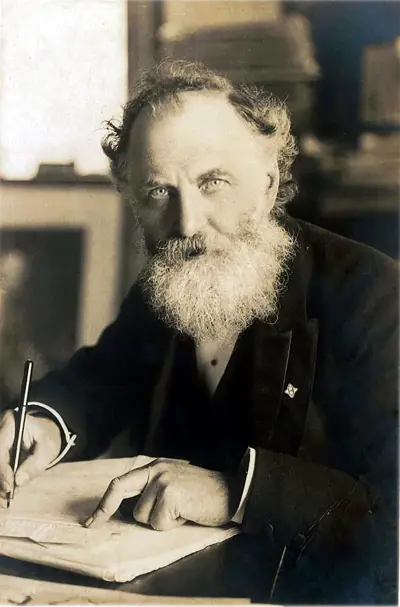
William Thomas Stead was a British newspaper editor who, as a pioneer of investigative journalism, became a controversial figure of the Victorian era. Stead published a series of hugely influential campaigns whilst editor of The Pall Mall Gazette, and he is best known for his 1885 series of articles, The Maiden Tribute of Modern Babylon. These were written in support of a bill, later dubbed the "Stead Act", that raised the age of consent from 13 to 16.
