John Hughes Quotes
I should sooner remain in Southern bondage than avail myself of the opportunity of Northern freedom.
Hughes was a strong critic of the exploitation of laborers in the North by what he called the “bloated capitalist” First Irish Bishop in the United States
John Hughes, 1797-1864, Catholic Archbishop of New York Quoted in McGreevy, Catholicism and American Freedom, 2003
Sourced by: Eigen's Political and Historical Quotations


He was making a generalization based on his historical study of nations and societies.

The Federal Fugitive Slave Act required all in free states to assist owners of escaped slaves to return them to their owners. In 1854 a Missouri slave owner tracked his escaped slave to Wisconsin and the Federal officials incarcerated the slave pending his return. A Wisconsin mob broke the slave out of jail and helped him escape to Canada. Booth was convicted under the Fugitive Slave Act for aiding the escape. Booth’s conviction was overturned by Wisconsin Supreme Court Judge Smith whose opinion overturned the Fugitive Slave Act on the grounds that it had usurped state’s rights. The Supreme Court overturned Smith’s ruling, but Booth was pardoned. See {587928}, {587927} & {587928}. State’s rights is a concept that we generally identify with Southern slave holding states to maintain slavery, but in this case, Wisconsin used the concept to fight slavery.


Much of the South was so insular that people knew nothing about the notion of abolition and just assumed that no one would ever consider freeing the slaves. Many never knew that it was the South that first fired on the Union troops and flag. If the North won the war, the assumption was that Northerners would then own the plantations and the valuable slaves. In reality, while all slaves were emancipated in the South, very few plantations and farms were confiscated from their Southern owners by Northerners despite the fact that there was political pressure in the North to confiscate the land of all rebels who had committed treason and use the value to repay the Union bonds and care for the wounded Union veterans and the widows of dead Union Soldiers. Eggleston was an accomplished writer who had served in the Confederate army of the Civil War. 20 year after the war he wrote a series of articles for the prestigious Northern Atlantic Monthly trying to convey the war from the Southerner’s point of view.


Fitzhugh was a Southern iconoclast whose view of Northern labor was much like that of Karl Marx but who was an enthusiastic supporter of slavery. Fitzhugh was of the opinion that slavery would be reinstated in the North and his treatise agues for that. More and more intellectual opinion was coming to the conclusion that slavery must be abolished or made universal before Lincoln’s famous statement in his debate against Douglas. Although Northerners and Southerners had come to agree on this point, they disagreed about which alternative would and should prevail.


Referring to Black Congressman Julian Bond: Louis Eugene Walcott


This is one of the major reasons that Slavery was so hard to end in the South. At the time, the dollar value of the Southern slaves was greater than the value of all the land, factories, inventory, and capital equipment of the South. Slaves were not only capital, they were the largest component of Southern capital and Southern wealth. There were numerous ideas of paying slave owners for the freedom of their slaves, and if this was done, it would have been far less expensive in money alone than the Civil War cost. However, the Southern leadership, like Fitzhugh, were totally intransient with culture and customs—indeed the Southern concept of manhood—was dependent in Slavery. The result was that no compensation was paid to slave owners and the South was impoverished as a result of its capital loss and it would not recover for 150 years.


Brown was the richest man in Rhode Island and made much of his money in the slave trade. This quotation shows that slavery was not completely a North verses South split. Northerners like Brown for whose family Brown University was named, was as virulent supporter of slavery as the most ardent Southerner.

Fitzhugh was a Southern iconoclast whose view of Northern labor was much like that of Karl Marx but who was an enthusiastic supporter of slavery.
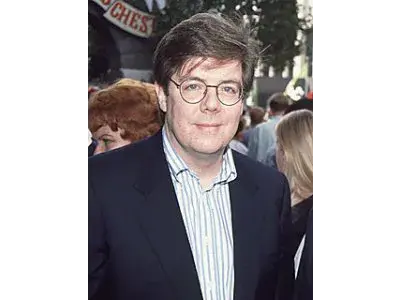
John Wilden Hughes Jr. was an American filmmaker. Beginning as an author of humorous essays and stories for National Lampoon, he went on to write, produce and sometimes direct some of the most successful live-action comedy films of the 1980s and 1990s such as National Lampoon's Vacation (1983) and its sequels National Lampoon's European Vacation (1985) and National Lampoon's Christmas Vacation (1989), Mr. Mom (1983), Sixteen Candles (1984), Weird Science (1985), The Breakfast Club (1985), Ferris Bueller's Day Off (1986), Pretty in Pink (1986), Some Kind of Wonderful (1987), Planes, Trains and Automobiles (1987), She's Having a Baby (1988), Uncle Buck (1989), Dutch (1991), Dennis the Menace (1993), Baby's Day Out (1994), the Beethoven franchise (co-written under a pseudonym with Amy Holden-Jones) and Home Alone (1990) and its sequels Home Alone 2: Lost in New York (1992) and Home Alone 3 (1997).
