Robert Dale Owen Quotes
It has always been a great wrong that these men and their families should be held in bondage.
Owen, Robert Dale. "To the President of the United States." The Policy of Emancipation: In Three Letters to the Secretary of War, the President of the United States, and the Secretary of the Treasury, J. B. Lippincott & Co., 1863.


I should sooner remain in Southern bondage than avail myself of the opportunity of Northern freedom.
Hughes was a strong critic of the exploitation of laborers in the North by what he called the “bloated capitalist” First Irish Bishop in the United States


In the first article of its first Constitution Vermont banned slavery and indentured servitude. Delaware had previously done it. See {621427}

Brown was the richest man in Rhode Island and made much of his money in the slave trade. This quotation shows that slavery was not completely a North verses South split. Northerners like Brown for whose family Brown University was named, was as virulent supporter of slavery as the most ardent Southerner.


Although English, Cobett spent time in America and published a newspaper, The Porcupine Gazette, in Philadelphia. We was very conservative but on the issue of slavery his resembled a liberal point of view. He never used sugar, coffee, or rum because slave labor produced them. However, he advocated legally enslaving lazy people, blacks and whites, who would not work.


He was making a generalization based on his historical study of nations and societies.
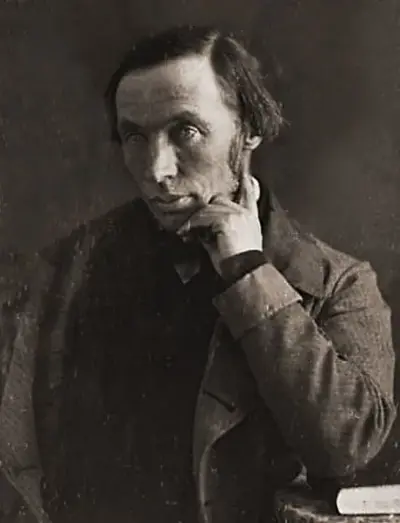
Robert Dale Owen was a Scottish-born Welsh social reformer who immigrated to the United States in 1825, became a U.S. citizen, and was active in Indiana politics as member of the Democratic Party in the Indiana House of Representatives (1835–39 and 1851–53) and represented Indiana in the U.S. House of Representatives (1843–47). As a member of Congress, Owen successfully pushed through the bill that established Smithsonian Institution and served on the Institution's first Board of Regents. Owen also served as a delegate to the Indiana Constitutional Convention in 1850 and was appointed as U.S. chargé d'affaires (1853–58) to Naples.
