John Legend Quotes
I studied African American studies, and I read these slave narratives and the escape narratives of people that were able to escape slavery and always found those stories intriguing and powerful and inspiring.
Legend, John. Quoted in "John Legend on Producing 'Underground'." Variety, Penske Media Corporation, 27 Feb. 2016.

I should sooner remain in Southern bondage than avail myself of the opportunity of Northern freedom.
Hughes was a strong critic of the exploitation of laborers in the North by what he called the “bloated capitalist” First Irish Bishop in the United States


This is an important quotation because it shows that slavery was the principle reason that the South succeeded and began their rebellion. In the early 20th century, there was a movement to make the Confederacy and the rebellion more noble by promoting the idea that the Civil War was fought by the South for more lofty reasons such as States Rights, Original Construction, different economic philosophies and the like. This was a more noble cause then the right to deny other human beings their rights, to own other human beings who they could beat, torture, sexually use and even murder them was a pretty selfish and demeaning reason to have started a rebellion that would then cost more Americans their lives than any other American conflict. The succession documents and others of the Southern States and the Confederacy make it clear that slavery was THE issue and fleeting references to any of the others were only made to complain about the potential effect on abolition and the refusal of the abolitionist states to cease aiding and protecting fugitive slaves.

Before Wilberforce, British society had never conceived of a world without slavery. It was assumed, unpleasant and cruel that it was, slavery was a part of civilization and much of the world and economy depended upon it. However, Wilberforce changed the way slavery was conceived of --- not necessary any longer and profoundly evil.


He is often referred to as “of Lahore.” He was a much better theologian than a historian. His credit of Islam with the principles that would end slavery, ignored the fact that just as American founding fathers espoused equality and freedom yet some owned slaves, likewise Mohammed, the founder of Islam, was a slaveholder. Historically, long after most of the world had abolished slavery, it still existed in the Islamic nations. They were forced out of the African slave trade by the European powers in the 19th century. But slavery was legal in Saudi Arabia as late as the 1960s. Slavery was still practiced in Sudan in 2005 with Muslims attacking Christians and Animists and taking them as slaves despite the official laws banning such practices. The government itself aided the slavers. Also, although Islam is credited with a major assault on slavery, it was not slavery per se that Muhammad banned. It was the slavery of another Muslim. Sharia and the Koran allows slavery so long as the slave is an unbeliever.


This law required the treatment of Blacks as whites were then treated with respect to indentured servitude—a limit of 10 years after which the person would be free. However, this law was poorly enforced. The “General Court” was the name for the legislature of the Rhode Island colony.


This fear was great among many who were abolitionists as potentially there might be mass slaughter of all Southern whites.


Even before we had a Constitution there was major opposition to slavery. The “price” of the American Union was the acceptance of the slavery of the South. But the hypocrisy of a country based on liberty to allow and enforce slavery was not lost on the founding fathers. Ironically the abolitionists among the founding fathers were certain that they could persuade the Southern slaveholders of the error of slavery in a few years and things would be set right in the land. Even George Washington {630626}, and Thomas Jefferson and some other slaveowners at the time wished to see its abolition. Slaveholding Southern Founding Fathers in general were so wary of the abolitionists that they achieved structural, disproportionate, power in the new Constitution to ward off the abolitionists attempts to reform slavery.

The Mormons were in Missouri at the time. Phelps was warning the church members essentially not to get involved with the slavery issue. The Mormon Church tended to support the institution of slavery at that time although Mormons themselves did not own slaves. However, we should remember that the Mormons themselves were a very persecuted group and Phelps and other Church leaders probably didn’t want their members alienating the non Mormons more than they already did by their existence. This was very similar to the Roman Catholic Church leaders at the time. The Catholics were also a persecuted minority and the Catholic Bishops often supported slavery—especially in the South to try and avoid hostility from the power structure and the majority. Some individual Mormons and individual Catholics were much opposed to slavery. See {629158} and {629154} for more on the Mormons and slavery. Later, Smith altered his early view.

Although English, Cobett spent time in America and published a newspaper, The Porcupine Gazette, in Philadelphia. We was very conservative but on the issue of slavery his resembled a liberal point of view. He never used sugar, coffee, or rum because slave labor produced them. However, he advocated legally enslaving lazy people, blacks and whites, who would not work.


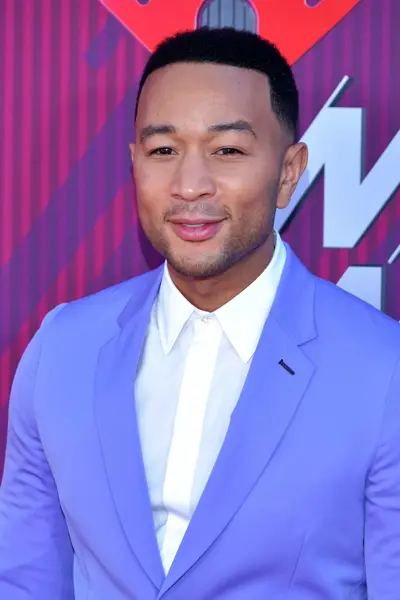
John Roger Stephens, known professionally as John Legend, is an American singer, songwriter, record producer, actor, film producer, and philanthropist. Prior to the release of Legend's debut album Get Lifted (2004), he collaborated with already-established artists and signed to Kanye West's GOOD Music. Legend has sung on Jay-Z's "Encore", Alicia Keys's "You Don't Know My Name", Dilated Peoples' "This Way", Slum Village's "Selfish", Fort Minor's "High Road", and played piano on Lauryn Hill's "Everything Is Everything". Legend's single "All of Me" from his fourth studio album Love in the Future (2013) was a Billboard Hot 100 number-one hit.
