Maulana Mohammad Ali Quotes
Slavery was an institution recognized by all people before Islam. To Islam lies the credit of laying down principles which if developed on the right lines, would have brought about its destruction.
He is often referred to as “of Lahore.” He was a much better theologian than a historian. His credit of Islam with the principles that would end slavery, ignored the fact that just as American founding fathers espoused equality and freedom yet some owned slaves, likewise Mohammed, the founder of Islam, was a slaveholder. Historically, long after most of the world had abolished slavery, it still existed in the Islamic nations. They were forced out of the African slave trade by the European powers in the 19th century. But slavery was legal in Saudi Arabia as late as the 1960s. Slavery was still practiced in Sudan in 2005 with Muslims attacking Christians and Animists and taking them as slaves despite the official laws banning such practices. The government itself aided the slavers. Also, although Islam is credited with a major assault on slavery, it was not slavery per se that Muhammad banned. It was the slavery of another Muslim. Sharia and the Koran allows slavery so long as the slave is an unbeliever.
Maulana Mohammad Ali, 1875-1951, Indian Islamic Cleric & Theologian, The Religion of Islam, 1936
Sourced by: Eigen's Political and Historical Quotations


Though Leo XIII was very much opposed to slavery, his claim that the Catholic Church “from the beginning” sought to end slavery overlooks the inconsistent reality of several of his predecessors’ teachings. For an example of this inconsistency one may find a relevant example as late as the 19th century, see the teachings of Gregory XVI {611428}, Pius IX {612304}, and Leo XIII {611844}

Fitzhugh was a Southern iconoclast whose view of Northern labor was much like that of Karl Marx but who was an enthusiastic supporter of slavery. Fitzhugh was of the opinion that slavery would be reinstated in the North and his treatise agues for that. More and more intellectual opinion was coming to the conclusion that slavery must be abolished or made universal before Lincoln’s famous statement in his debate against Douglas. Although Northerners and Southerners had come to agree on this point, they disagreed about which alternative would and should prevail.

Even before we had a Constitution there was major opposition to slavery. The “price” of the American Union was the acceptance of the slavery of the South. But the hypocrisy of a country based on liberty to allow and enforce slavery was not lost on the founding fathers. Ironically the abolitionists among the founding fathers were certain that they could persuade the Southern slaveholders of the error of slavery in a few years and things would be set right in the land. Even George Washington {630626}, and Thomas Jefferson and some other slaveowners at the time wished to see its abolition. Slaveholding Southern Founding Fathers in general were so wary of the abolitionists that they achieved structural, disproportionate, power in the new Constitution to ward off the abolitionists attempts to reform slavery.


Baldwin was a young lawyer at the time. He represented a shipload of ex-slaves who had taken over their Spanish slave ship and landed in America. The Spanish claimed, the ship owners and some of the crew all claimed the “property.”


American reformers followed slavery issues in Africa and elsewhere. The status of Africa was particularly important as the notion of extensive American Black colonization was still viable to many.
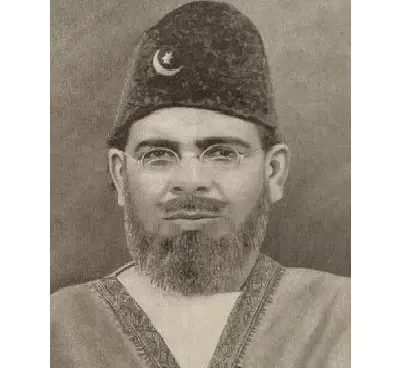
Muhammad Ali Jauhar, also known as Maulana Mohammad Ali Jauhar (Urdu: مَولانا مُحمّد علی جَوہر), was an Indian Muslim activist, journalist and a poet, and was among the leading figures of the Khilafat Movement.
