William Wines Phelps Quotes
Slaves are real estate in this and other states, and wisdom would dictate great care among the branches of the church of Christ on this subject
The Mormons were in Missouri at the time. Phelps was warning the church members essentially not to get involved with the slavery issue. The Mormon Church tended to support the institution of slavery at that time although Mormons themselves did not own slaves. However, we should remember that the Mormons themselves were a very persecuted group and Phelps and other Church leaders probably didn’t want their members alienating the non Mormons more than they already did by their existence. This was very similar to the Roman Catholic Church leaders at the time. The Catholics were also a persecuted minority and the Catholic Bishops often supported slavery—especially in the South to try and avoid hostility from the power structure and the majority. Some individual Mormons and individual Catholics were much opposed to slavery. See {629158} and {629154} for more on the Mormons and slavery. Later, Smith altered his early view.
William Wines Phelps, 1792–1872, Mormon Writer & Editor, Assistant President of the Mormon Church & Secretary to Prophet Joseph Smith, Star (Mormon Church Magazine), 1833
Sourced by: Eigen's Political and Historical Quotations

This is a fascinating quotation of the then leader of the Mormons. Historically, it shows us that many from the North, primarily to avoid the military draft of the Civil War, left their homes and emigrated to California, Washington and Oregon. In doing so, many passed through Salt Lake City and many became Mormons and stayed. These “Copperheads” included a serious peace movement at the time along with racists who didn’t want to risk their lives over the issue of slavery. Next we see the affinity that the Mormons had for the Copperheads. Actually, although the Mormons did not own slaves the church leadership had not been, well before the civil war, opposed to slavery and some were supportive of the institution. See {629157} and {629154}. Note the hostility that Young had for Abolitionists. At that time, a large proportion of the Abolitionists were religious Protestant laymen and laywomen and ministers. They were very outspoken and used writing and the media of the time to make their case. In almost all cases they also opposed polygamy and from a sexual morality point of view, saw it as little different from the slave owners sexual exploitation of his female slaves. Moreso than any other issue, polygamy was damaging the Mormon image amongst other Americans, It was the Abolitionists who were principle drivers of this negative image problem of the Mormons, So Young resented these “busybodies” and empathized with the Southerners not because he personally favored slavery, but they were both “victims” of the same set of do gooders. Young had a very limited narrow view of the rest of the country, and completely overestimated the prospects of the Southern Rebels.


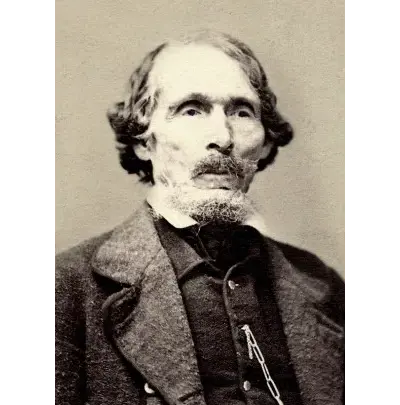
William Wines Phelps was an early leader of the Latter Day Saint movement. He printed the first edition of the Book of Commandments that became a standard work of the church and wrote numerous hymns, some of which are included in the current version of The Church of Jesus Christ of Latter-day Saints' (LDS Church) hymnal. He was at times both close to and at odds with church leadership. He testified against Joseph Smith, providing evidence that helped persuade authorities to arrest Smith. He was excommunicated three times and rejoined the church each time. He was a ghost writer for Smith, was called by Smith to serve as assistant president of the church in Missouri, and served on the Council of Fifty. After Smith's martyrdom, he supported Brigham Young as the church's new president.
