Ginni Rometty Quotes
An Act Declaring The Negro, Mulatto, And Indian Slaves Within This Dominion, To Be Real Estate …
Virginia, Title of Law, October 1705
Sourced by: Eigen's Political and Historical Quotations

The Mormons were in Missouri at the time. Phelps was warning the church members essentially not to get involved with the slavery issue. The Mormon Church tended to support the institution of slavery at that time although Mormons themselves did not own slaves. However, we should remember that the Mormons themselves were a very persecuted group and Phelps and other Church leaders probably didn’t want their members alienating the non Mormons more than they already did by their existence. This was very similar to the Roman Catholic Church leaders at the time. The Catholics were also a persecuted minority and the Catholic Bishops often supported slavery—especially in the South to try and avoid hostility from the power structure and the majority. Some individual Mormons and individual Catholics were much opposed to slavery. See {629158} and {629154} for more on the Mormons and slavery. Later, Smith altered his early view.

He was also himself a ship owner in the slave trade and he was the brother of the leading Rhode Island abolitionist, Moses Brown. See {585793}. Brown became the first American, prosecuted in federal court for illegal slave trading –-- a prosecution brought, in part, by his own brother. He was, however, acquitted.


In early New England the General Court served as both a legislature and a judiciary before separation of powers was introduced. 5 years later the Court banned importing African slaves at all. While slavery was not common in Rhode Island, the laws was not seriously enforced on those who would defy them. It does represent a public anti-slavery sentiment that existed in Early America. It would take 200 years for Rhode Island to finally eliminate all forms of slavery.


See the Vermont Constitution for another variant of how slavery was abolished: {616994}


There was little thought of emancipating slaves or their value to the South by the senior officers of the Union Army at the beginning of the war. The Secretary of War however changed that. See {629184}.


The general issued a military order emancipating slaves in Florida, Georgia and South Carolina. President Abraham Lincoln rescinded the order feeling it was too premature and it would cause the slave states that stayed in the Union--Delaware, Maryland, and Kentucky--to go over to the Confederates.

Baron Brougham and Vaux

Negotiations regarding the exchange of prisoners and property. This was his view of his supposed obligation to return Negro slaves who had escaped and gone to the British during the war. The treaty of peace specified that all “property” including slaves, taken by, the British be returned to the Americans. But he and other officers did not always do so as they thought they had higher moral obligations. See {621936} for example.
The white skilled laborers of the North were not the only ones who found slavery deleterious to their economic well being. The complaints to the Carolina legislature produced a finding as early as 1744 that whites were adversely affected.

Miller was the first Black American admitted to a Graduate Program—Johns Hopkins—in Mathematics

The perception of the necessity of slavery was evident very early in the South.

During the same year England outlawed the slave trade and English citizens and ships from participating in it.

This was a very creative solution to the problem of slavery. Slave holders and their supports have always claimed that the paid valuable money to acquire a slave and slaves were valuable personal property. Freeing slaves was the government confiscating their wealth. The Pennsylvania solution was to say that the labor of a slave for 7 years was worth far more than the cost of a slave, so that under this law, slave owners could get their monetary value back and make a modest profit, and slavery would gradually disappear over a 7 year period if no new slavery were allowed. Although it made a lot of sense, the Southern States felt that their economy was different—that they could never get free white men to pick cotton.

This is an example of what was one of the worst perversions of slavery. This minister actually argued that Blacks were much better off as slaves and slavery served them well.

There was little thought of emancipating slaves or their value to the South by the senior officers of the Union Army at the beginning of the war. The Secretary of War changed that. See {629183}for a typical Union General’s view at the beginning of the war.
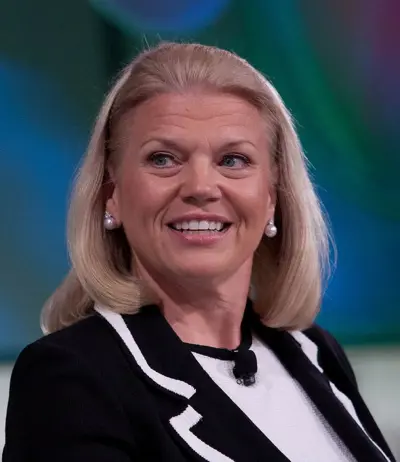
Virginia Marie "Ginni" Rometty is an American business executive who served as executive chairman of IBM after stepping down as CEO on April 1, 2020. She previously served as chairman, president and CEO of IBM, becoming the first woman to head the company. She retired from IBM on December 31, 2020 after a near-40 year career at IBM. Prior to becoming president and CEO in January 2012, she first joined IBM as a systems engineer in 1981 and subsequently headed global sales, marketing, and strategy. While general manager of IBM's global services division, in 2002 she helped negotiate IBM's purchase of PricewaterhouseCoopers' IT consulting business, becoming known for her work integrating the two companies. As CEO, she focused IBM on analytics, cloud computing, and cognitive computing systems.
