Pennsylvania Quotes
No covenant of personal servitude or apprenticeship whatsoever shall be valid or binding on a Negro or Mulatto for a longer time than seven year.
This was a very creative solution to the problem of slavery. Slave holders and their supports have always claimed that the paid valuable money to acquire a slave and slaves were valuable personal property. Freeing slaves was the government confiscating their wealth. The Pennsylvania solution was to say that the labor of a slave for 7 years was worth far more than the cost of a slave, so that under this law, slave owners could get their monetary value back and make a modest profit, and slavery would gradually disappear over a 7 year period if no new slavery were allowed. Although it made a lot of sense, the Southern States felt that their economy was different—that they could never get free white men to pick cotton.
Pennsylvania, An Act for the Gradual Abolition of Slavery, March 1, 1780
Sourced by: Eigen's Political and Historical Quotations

Incredibly, the judges received a higher fee if they found that an accused Negro was a fugitive slave and must be returned, than if he found that it was a case of mistaken identity or the laws of the northern state allowed mandated freedom. Despite the bias, the moral issue was so profound that many Northern judges refused to return fugitive slaves, even after the Fugitive Slave Act.

There was little thought of emancipating slaves or their value to the South by the senior officers of the Union Army at the beginning of the war. The Secretary of War changed that. See {629183}for a typical Union General’s view at the beginning of the war.

In early New England the General Court served as both a legislature and a judiciary before separation of powers was introduced. 5 years later the Court banned importing African slaves at all. While slavery was not common in Rhode Island, the laws was not seriously enforced on those who would defy them. It does represent a public anti-slavery sentiment that existed in Early America. It would take 200 years for Rhode Island to finally eliminate all forms of slavery.

The general issued a military order emancipating slaves in Florida, Georgia and South Carolina. President Abraham Lincoln rescinded the order feeling it was too premature and it would cause the slave states that stayed in the Union--Delaware, Maryland, and Kentucky--to go over to the Confederates.


Negotiations regarding the exchange of prisoners and property. This was his view of his supposed obligation to return Negro slaves who had escaped and gone to the British during the war. The treaty of peace specified that all “property” including slaves, taken by, the British be returned to the Americans. But he and other officers did not always do so as they thought they had higher moral obligations. See {621936} for example.

During the same year England outlawed the slave trade and English citizens and ships from participating in it.

This letter was signed by a local white Priest and two other leading planters. This quotation gives us a marvelous feeling for what occurred when parts of the South was occupied by the Union Army shortly after the Emancipation Proclamation was issued. Minor and his fellows just did not “get it.” The concept of freedom of the slaves was intellectually so foreign to them, that they wanted the Union Army to “compel” the freed slaves to work. They were horrified that slaves went wherever they wanted, and they were most outraged when former slaves who had enlisted in the Army, would “visit” their old plantation setting such a terrible example. The letter gives us a perspective on how difficult it was to change the mental set of Southern Whites and why Reconstruction was so difficult. The year of the letter is somewhat uncertain as the original letter appears to be dated 1862 but the writing is not clear and that date does not comport with the history of the era and we believe 1863 was the correct year. The photograph is of the first official colored troops mustered into the Union Army. They were called the Louisiana Native Guards and contained the ex slaves who went over to the Union side just before the time this slave owner complained. These ex slaves, in uniform, and with arms would sometimes visit the plantations where they and been enslaved, thrilling the remaining slaves and infuriating owners like Minor.

See the Vermont Constitution for another variant of how slavery was abolished: {616994}


As an entertainer she had toured much of the world and seen American slavery and that of some other nations. She became a staunch abolitionist and like entertainers in the 20th and 21st centuries she used her celebrity to give anti-slavery lectures and perform for audiences where she donated the proceeds of the event to the abolition cause. She is a particularly interesting political figure in that she seems to be one of the first entertainers to perform for a social cause and become an activist.


The President often referred to this statement as an example of his wife’s acumen. She had been born to a Southern plantation and inherited the land and the slaves. Her view, and his, were typical of the Southern point of view in early America.


This is the first formal call for reparations of some kind for slaves after freedom. It is almost always quoted when the issue of reparations for Blacks is discussed. Dwight was not some left wing liberal. Actually he was one of the most conservative Americans at the time. He was an ardent opponent of Thomas Jefferson (see {600384}.) and a staunch supporter of the Federalists. He was one of the major spokesmen for the establishment and upper class of the day. He was also an ardent Christian minister who saw slavery for what it was—an evil sin and an injustice to any humans in that condition.


She was one of the early abolitionists. Despite the Southern attempted repression of information of slave resistance, some of the facts emerged and were well known in the North. The South tried to suppress these incidents lest other slaves get ideas from it. Also the Southerners often maintained that Africa was so primitive and underdeveloped, that the slaves were better off in America; these actions of rebellion belied this notion.
This law required the treatment of Blacks as whites were then treated with respect to indentured servitude—a limit of 10 years after which the person would be free. However, this law was poorly enforced. The “General Court” was the name for the legislature of the Rhode Island colony.
In never occurred to him that he and his family were also adverse to the backbreaking stoop labor of cotton picking.

No sooner had Georgia Banned slavery, then some of the large planters petitioned the trustees for a reversal of the ban on the grounds that South Carolina, their neighboring colony allowed planters to use slaves and this put the Georgia planters at a major competitive disadvantage. Oglethorpe won the battle but later lost the war as the ban was overturned and Georgia became one of the worst slave states. What is interesting about this quotation is that in addition to his pragmatic reasons for banning slavery, he was morally offended but the notion and method of chattel slavery and the slave trade. See Quotes 643524 and 643525.

This was part of his presentation to Northern influential business men showing them what he claimed was the New South. He was particularly complimentary about the negro Christian viewpoint that inhibited revenge or retaliation for their terrible treatment. The favorable lines about Negroes were well received by Northerners. However, they were mostly unaware of his racist views he expressed when in the South. See Quotation 643649.
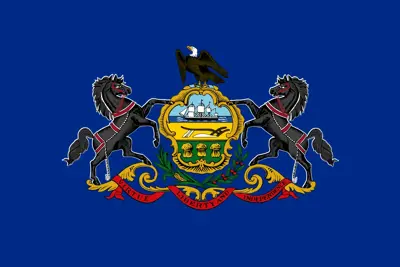
Pennsylvania (/ˌpɛnsəlˈveɪniə/ (listen) PEN-səl-VAY-nee-ə) (Pennsylvania German: Pennsilfaani), officially the Commonwealth of Pennsylvania, is a state in the Mid-Atlantic, Northeastern, and Appalachian regions of the United States. The Commonwealth is bordered by Delaware to the southeast, Maryland to the south, West Virginia to the southwest, Ohio to the west, Lake Erie and the Canadian province of Ontario to the northwest, New York to the north, and New Jersey to the east, while the Appalachian Mountains run through its middle.
