Delaware Quotes
No person hereafter imported into this State from Africa ought to be held in slavery under any presence whatever; and no negro, Indian, or mulatto slave ought to be brought into this State, for sale, from any part of the world.
See the Vermont Constitution for another variant of how slavery was abolished: {616994}
Delaware, Article 29, Delaware Constitution 1776
Sourced by: Eigen's Political and Historical Quotations

In the first article of its first Constitution Vermont banned slavery and indentured servitude. Delaware had previously done it. See {621427}

This quotation illustrates the strong abolitionist tendency in the Ohio Territory. Under this clause, escaped slaves from Southern states would not be returned by the state authorities. Even more insulting to the slave enthusiasts of the South, if a Southerner brought any slaves into Ohio with them as was common for Southerners traveling with their personal slaves or horse team drivers, those slaves would be free. An interesting aspect of this clause of the Ohio Constitution was that the beginning was, word for word, copied from the Northwest Ordinance of 1787. See {618100}.

During the same year England outlawed the slave trade and English citizens and ships from participating in it.
This clause was superseded by the 13th Amendment {621373}. More and more abolitionists were refusing on ethical and moral grounds to return fugitive slaves. Some states actually passed laws forbidding the return of fugitive slaves and freeing them the second they set foot in the state. Some objected arguing that the law must be enforced and the Constitution obeyed. They had a point, so the solution was to change the Constitution which is what was done in 1865.

Louisiana to this day has a different legal system from the rest of the United States as it was originally based on the French Napoleonic Code. Most people did not realize that Louisiana had strictures against breaking up families—even with slaves.

There was little thought of emancipating slaves or their value to the South by the senior officers of the Union Army at the beginning of the war. The Secretary of War however changed that. See {629184}.

He was also himself a ship owner in the slave trade and he was the brother of the leading Rhode Island abolitionist, Moses Brown. See {585793}. Brown became the first American, prosecuted in federal court for illegal slave trading –-- a prosecution brought, in part, by his own brother. He was, however, acquitted.


This treaty shows slaves were a major currency of the times and cultures. The Arab Armies of Egypt and the Nubians with this treaty declared an armistice. The extensive Arab use of Black slaves officially begun at this time, has plagued Africa since. Arab slave traders were the middle men who met the European and American demand for slaves until the 19th century. Even at the millennium the Sudanese civil war between the Arab North and Black South has reflected this resentment and hostility and has involved the Northerner’s enslaving tens of thousands of Black Southerners.

The perception of the necessity of slavery was evident very early in the South.


In the early days of the Civil War slaves who escaped and reached the Northern lines were routinely returned to their Southern owners as the Fugitive Slave Act required. The first actual emancipation of the Civil war was not the President’s proclamation but was Butler who as a Union General ordered that the slaves escaping from Virginia no longer be returned. He was accused of violating the then existing law, however he had a legal rationale which hoisted Virginia on its own petard.

No sooner had Georgia Banned slavery, then some of the large planters petitioned the trustees for a reversal of the ban on the grounds that South Carolina, their neighboring colony allowed planters to use slaves and this put the Georgia planters at a major competitive disadvantage. Oglethorpe won the battle but later lost the war as the ban was overturned and Georgia became one of the worst slave states. What is interesting about this quotation is that in addition to his pragmatic reasons for banning slavery, he was morally offended but the notion and method of chattel slavery and the slave trade. See Quotes 643524 and 643525.


This was a very creative solution to the problem of slavery. Slave holders and their supports have always claimed that the paid valuable money to acquire a slave and slaves were valuable personal property. Freeing slaves was the government confiscating their wealth. The Pennsylvania solution was to say that the labor of a slave for 7 years was worth far more than the cost of a slave, so that under this law, slave owners could get their monetary value back and make a modest profit, and slavery would gradually disappear over a 7 year period if no new slavery were allowed. Although it made a lot of sense, the Southern States felt that their economy was different—that they could never get free white men to pick cotton.
This is an important quotation because it shows that slavery was the principle reason that the South succeeded and began their rebellion. In the early 20th century, there was a movement to make the Confederacy and the rebellion more noble by promoting the idea that the Civil War was fought by the South for more lofty reasons such as States Rights, Original Construction, different economic philosophies and the like. This was a more noble cause then the right to deny other human beings their rights, to own other human beings who they could beat, torture, sexually use and even murder them was a pretty selfish and demeaning reason to have started a rebellion that would then cost more Americans their lives than any other American conflict. The succession documents and others of the Southern States and the Confederacy make it clear that slavery was THE issue and fleeting references to any of the others were only made to complain about the potential effect on abolition and the refusal of the abolitionist states to cease aiding and protecting fugitive slaves.

Incredibly, the judges received a higher fee if they found that an accused Negro was a fugitive slave and must be returned, than if he found that it was a case of mistaken identity or the laws of the northern state allowed mandated freedom. Despite the bias, the moral issue was so profound that many Northern judges refused to return fugitive slaves, even after the Fugitive Slave Act.

In contrast to Massachusetts with had passed a law in 1641 banning slavery (Quote 643567), Maryland 22 years later became to first state to pass a law to formally recognize and allow Negro slavery.


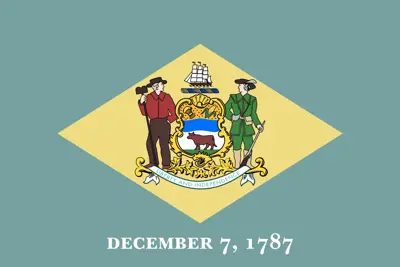
Delaware is one of the 50 states of the United States, in the Mid-Atlantic or Northeastern region. It is bordered to the south and west by Maryland, north by Pennsylvania, and east by New Jersey and the Atlantic Ocean. The state takes its name from Thomas West, 3rd Baron De La Warr, an English nobleman and Virginia's first colonial governor.
