John Jay Quotes
I purchase slaves and manumit [free] them at proper ages, and when their faithful services shall have afforded a reasonable retribution
John Jay, 1745-1829, President of the Continental Congress, Governor of New York (Federalist), U. S. Foreign Secretary, First Chief Justice of the U. S. Supreme Court, 1798
Sourced by: Eigen's Political and Historical Quotations

He was also himself a ship owner in the slave trade and he was the brother of the leading Rhode Island abolitionist, Moses Brown. See {585793}. Brown became the first American, prosecuted in federal court for illegal slave trading –-- a prosecution brought, in part, by his own brother. He was, however, acquitted.

Louisiana to this day has a different legal system from the rest of the United States as it was originally based on the French Napoleonic Code. Most people did not realize that Louisiana had strictures against breaking up families—even with slaves.

The perception of the necessity of slavery was evident very early in the South.


In the early days of the Civil War slaves who escaped and reached the Northern lines were routinely returned to their Southern owners as the Fugitive Slave Act required. The first actual emancipation of the Civil war was not the President’s proclamation but was Butler who as a Union General ordered that the slaves escaping from Virginia no longer be returned. He was accused of violating the then existing law, however he had a legal rationale which hoisted Virginia on its own petard.

In early New England the General Court served as both a legislature and a judiciary before separation of powers was introduced. 5 years later the Court banned importing African slaves at all. While slavery was not common in Rhode Island, the laws was not seriously enforced on those who would defy them. It does represent a public anti-slavery sentiment that existed in Early America. It would take 200 years for Rhode Island to finally eliminate all forms of slavery.

This treaty shows slaves were a major currency of the times and cultures. The Arab Armies of Egypt and the Nubians with this treaty declared an armistice. The extensive Arab use of Black slaves officially begun at this time, has plagued Africa since. Arab slave traders were the middle men who met the European and American demand for slaves until the 19th century. Even at the millennium the Sudanese civil war between the Arab North and Black South has reflected this resentment and hostility and has involved the Northerner’s enslaving tens of thousands of Black Southerners.

He was the last Pope to hold temporal power. This defense of slavery was all the more surprising because America was fighting about the issue in the Civil War and nations like England had abolished slavery. 99 years later Vatican II altered Pius IX’s statement forever. See {612715}.
Most of us think the California was not a slave state, but in the early 1850s the California law (such as it was) allowed a slave owner to “sojourn” in California with his property that could include slaves. A number of Southern save owners took slaves to the California gold fields to do mining. There was a great deal of resentment on the part of the other miners and the free labor of the territory. In 1855, slavery in California was abolished.

See the Vermont Constitution for another variant of how slavery was abolished: {616994}

This quotation illustrates the strong abolitionist tendency in the Ohio Territory. Under this clause, escaped slaves from Southern states would not be returned by the state authorities. Even more insulting to the slave enthusiasts of the South, if a Southerner brought any slaves into Ohio with them as was common for Southerners traveling with their personal slaves or horse team drivers, those slaves would be free. An interesting aspect of this clause of the Ohio Constitution was that the beginning was, word for word, copied from the Northwest Ordinance of 1787. See {618100}.

Jefferson had calculated that if he allowed slaves to “breed”, he could realize a profit of 4% a year just from the increase of the number of slaves he owned. He recommended the business of breeding slaves to several people, and at this time showed no moral compunction about slavery.
Many historians of higher education to not agree with Wilder’s overall generality. However, it was certainly the case that slavery was a major factor in generating the funds for some early universities in the North, but others were “hotbeds” of abolition from their very inception.


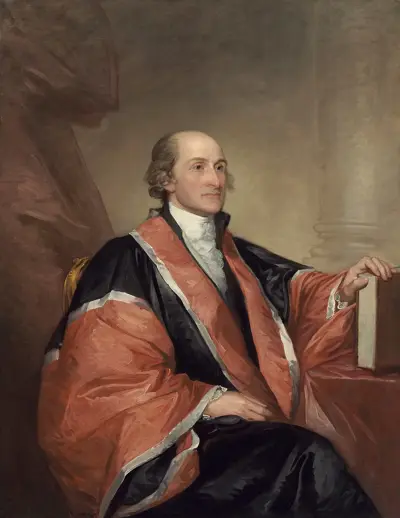
John Jay was an American statesman, patriot, diplomat, Founding Father, abolitionist, negotiator, and signatory of the Treaty of Paris of 1783. He served as the second Governor of New York and the first Chief Justice of the United States (1789–1795). He directed U.S. foreign policy for much of the 1780s and was an important leader of the Federalist Party after the ratification of the United States Constitution in 1788.
