Tom Harkin Quotes
Jobs are not the issue. Even the slaves had jobs.
Thomas R. Harkin, U. S. Senator (Democrat, IA), Campaign Speech, September 16, 1991
Sourced by: Eigen's Political and Historical Quotations


Abd al-Rahman Ibn Mohammad. He is generally regarded to be the World’s first social scientist. The largest statue in Tunisia of not of a military leader of king, but of this social scientist.


This is one of the major reasons that Slavery was so hard to end in the South. At the time, the dollar value of the Southern slaves was greater than the value of all the land, factories, inventory, and capital equipment of the South. Slaves were not only capital, they were the largest component of Southern capital and Southern wealth. There were numerous ideas of paying slave owners for the freedom of their slaves, and if this was done, it would have been far less expensive in money alone than the Civil War cost. However, the Southern leadership, like Fitzhugh, were totally intransient with culture and customs—indeed the Southern concept of manhood—was dependent in Slavery. The result was that no compensation was paid to slave owners and the South was impoverished as a result of its capital loss and it would not recover for 150 years.


The Mormons were in Missouri at the time. Phelps was warning the church members essentially not to get involved with the slavery issue. The Mormon Church tended to support the institution of slavery at that time although Mormons themselves did not own slaves. However, we should remember that the Mormons themselves were a very persecuted group and Phelps and other Church leaders probably didn’t want their members alienating the non Mormons more than they already did by their existence. This was very similar to the Roman Catholic Church leaders at the time. The Catholics were also a persecuted minority and the Catholic Bishops often supported slavery—especially in the South to try and avoid hostility from the power structure and the majority. Some individual Mormons and individual Catholics were much opposed to slavery. See {629158} and {629154} for more on the Mormons and slavery. Later, Smith altered his early view.


Ruffin is more widely known as the man who fired the first shot of the Civil War.

Fitzhugh was a Southern iconoclast whose view of Northern labor was much like that of Karl Marx but who was an enthusiastic supporter of slavery. Fitzhugh was of the opinion that slavery would be reinstated in the North and his treatise agues for that. More and more intellectual opinion was coming to the conclusion that slavery must be abolished or made universal before Lincoln’s famous statement in his debate against Douglas. Although Northerners and Southerners had come to agree on this point, they disagreed about which alternative would and should prevail.


This is a memorable historical quotations because it shows the extreme level of hypocrisy and lack of logic of which man is capable of when his way of life and world view is threatened. In this case Gordon sees the right to own slaves as a basic civil right. He does not see that the right of possessing slaves totally denies virtually all civil rights to the slave. In his and other Southern views, to assure a man’s liberty he had to have the right and freedom to deny freedom to others, torture others at will, destroy families and remove all hope and aspiration of some people.

The Southeastern states were in a triple bind regarding slavery. The slave trade was ended so new slaves could not be imported. The existing slaves commanded much higher prices in the West and were sold to those destinations. Meanwhile, the European abject poverty provided a ready source of immigrants who would work for wages that were not much more than the cost of keeping and amortizing a slave. At the beginning of the Civil War, the death knell of Southeastern slavery had already been ringing.


This was written under the name of Ragnar Redbeard. There are a few scholars who believe that it was written by Jack London, but most credit Desmond.

Brown was the richest man in Rhode Island and made much of his money in the slave trade. This quotation shows that slavery was not completely a North verses South split. Northerners like Brown for whose family Brown University was named, was as virulent supporter of slavery as the most ardent Southerner.
The cotton industry and slavery were a very important part of the economy of Providence, RI. The Rhode Island cotton mills were supplied by Southern cotton produced by slaves and carried from the South on Rhode Island ships. Many of the southern slaves were kidnapped from Africa from Rhode Island slave trading ships. When the slave trade was made illegal, Brown was the first slave trader prosecuted. His brother, Moses Brown, a vehement abolitionist was one of the men who brought the prosecution.
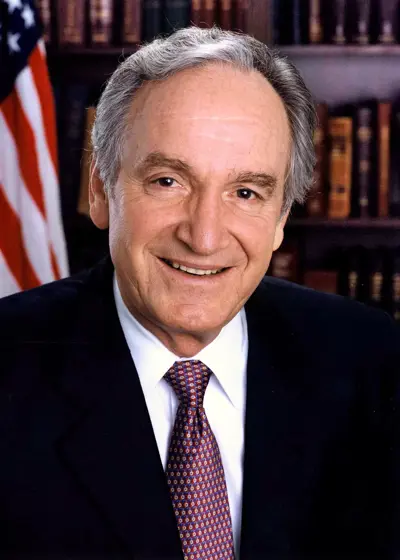
Thomas Richard Harkin is an American politician, lawyer and author who served as a United States Senator from Iowa from 1985 to 2015. A member of the Democratic Party, he previously was the U.S. Representative for Iowa's 5th congressional district from 1975 to 1985.
