John Brown Gordon Quotes
Slavery is the handmaiden of civil liberty.
This is a memorable historical quotations because it shows the extreme level of hypocrisy and lack of logic of which man is capable of when his way of life and world view is threatened. In this case Gordon sees the right to own slaves as a basic civil right. He does not see that the right of possessing slaves totally denies virtually all civil rights to the slave. In his and other Southern views, to assure a man’s liberty he had to have the right and freedom to deny freedom to others, torture others at will, destroy families and remove all hope and aspiration of some people.
John Brown Gordon, 1832-1904, Confederate General, U. S. Senator (Democrat, GA), Governor of Georgia, Quoted in Jamie, Malanowski, “Misplaced Honor”, New York Times, May 26, 2013
Sourced by: Eigen's Political and Historical Quotations


Fitzhugh was a Southern iconoclast whose view of Northern labor was much like that of Karl Marx but who was an enthusiastic supporter of slavery. Fitzhugh was of the opinion that slavery would be reinstated in the North and his treatise agues for that. More and more intellectual opinion was coming to the conclusion that slavery must be abolished or made universal before Lincoln’s famous statement in his debate against Douglas. Although Northerners and Southerners had come to agree on this point, they disagreed about which alternative would and should prevail.


Hammond had published a series of letters attacking the “cruelty” of the industrial factories of the North compared to the relative “humaneness” of Southern slavery.

_0_thumbnail_47x47.jpg)

Brown was the richest man in Rhode Island and made much of his money in the slave trade. This quotation shows that slavery was not completely a North verses South split. Northerners like Brown for whose family Brown University was named, was as virulent supporter of slavery as the most ardent Southerner.


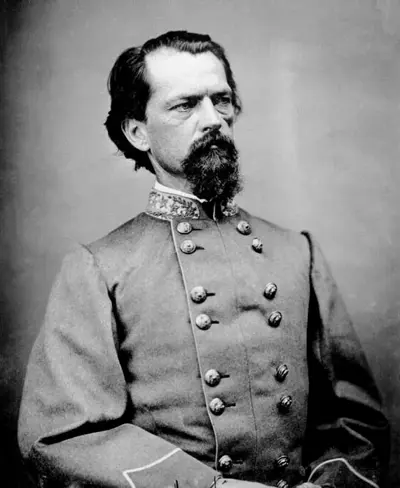
John Brown Gordon (January 9, 1904) was an attorney, a slaveholding plantation owner, general in the Confederate States Army, and politician in the postwar years. By the end of the Civil War, he had become "one of Robert E. Lee's most trusted generals."(p241)
