James Henry Hammond Quotes
Our patriarchal scheme [Southern slavery] awakens the higher and finer feelings of our nature. It is not wanting in its enthusiasm and its poetry.
Hammond had published a series of letters attacking the “cruelty” of the industrial factories of the North compared to the relative “humaneness” of Southern slavery.
James H. Hammond, 1807-1864, U. S. Congressman & Senator (Democrat, SC), 1845
Sourced by: Eigen's Political and Historical Quotations

Many of the Americans captured by the Islamic Barbary pirates in the years leading up to the Barbary War were sold into slavery. Eaton, who was the American consul at Tunis, couldn’t help but notice the tragic parallel between the suffering of those captured by the pirates and slaves in the American South.

This is a memorable historical quotations because it shows the extreme level of hypocrisy and lack of logic of which man is capable of when his way of life and world view is threatened. In this case Gordon sees the right to own slaves as a basic civil right. He does not see that the right of possessing slaves totally denies virtually all civil rights to the slave. In his and other Southern views, to assure a man’s liberty he had to have the right and freedom to deny freedom to others, torture others at will, destroy families and remove all hope and aspiration of some people.

The Republican Party condemned polygamy and slavery in its party platform of 1856


He was making a generalization based on his historical study of nations and societies.


Brown was the richest man in Rhode Island and made much of his money in the slave trade. This quotation shows that slavery was not completely a North verses South split. Northerners like Brown for whose family Brown University was named, was as virulent supporter of slavery as the most ardent Southerner.

His voyage took him to several slave countries where his anti-slavery views were challenged by locals.

This quotation is interesting for two reasons. First it is a good example of the twisted logic of some of the Slavery apologists who claimed that the Negro slave was better off than the free wage earner. The second reason is that it illustrates the norms of the treatment of the working man before the Civil War. The union movement would change the situation for the free laborer over the next century and then holidays and worker rights became normalized in American society. See {641290} for another of his absurd arguments.

As an entertainer she had toured much of the world and seen American slavery and that of some other nations. She became a staunch abolitionist and like entertainers in the 20th and 21st centuries she used her celebrity to give anti-slavery lectures and perform for audiences where she donated the proceeds of the event to the abolition cause. She is a particularly interesting political figure in that she seems to be one of the first entertainers to perform for a social cause and become an activist.
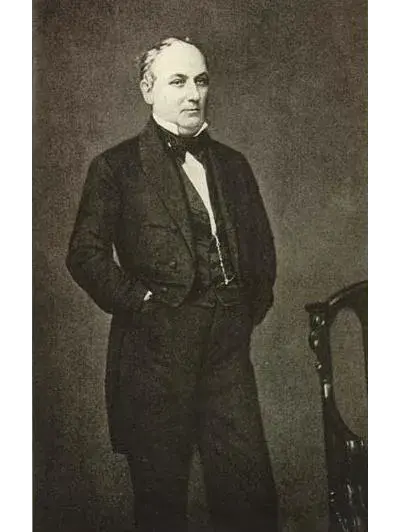
James Henry Hammond was an attorney, politician, and planter from South Carolina. He served as a United States Representative from 1835–36, the 60th Governor of South Carolina from 1842–44, and United States Senator from 1857 to 1860. He was considered one of the major spokesmen in favor of slavery in the years before the American Civil War.
