Edwin Chadwick Quotes
Disease among the working classes is caused by atmospheric impurities produced by decomposing animal and vegetable substances, by damp and filth, and close and overcrowded dwellings.
Edwin Chadwick, 1800-1890, English Reformer and Secretary to Jeremy Bentham, Secretary to the Poor Law Commission, Principal architect of the Sanitary Reform movement and British Public Health, Report into the Sanitary Conditions of the Labouring Population of Great Britain, 1842
Sourced by: Eigen's Political and Historical Quotations

This was a new idea for most Americans at the time. A century later, there were still a few politicians who did not accept this idea.


The United States had not yet dug its canal but there had been a feeble French attempt amidst national and international scheming, intrigue, and fraud.

He called attention to the relationship between the poverty living conditions, sanitation, and the outbreak of cholera in the Manchester Cholera epidemic of 1832. He went on to advocate shorter working hours, better sanitation, and education for the mill workers.


The South has always been backward compared to the rest of the nation. By the 21st century the gap had gotten narrower. However, one of the reasons that Mrs. Roosevelt was unpopular with the Southern whites was not only that she was an outspoken critic of segregation and associated with Negroes, but she would publically point out the areas of Southern backwardness. However, the upper and middle class Southerners resented anyone—especially “outsiders” publicly exposing Southern weakness.

He, like so many Americans were shocked at the statistics on the relationship between earnings and infant mortality which does not exist in other industrial democracies.


This is an amazing quotation and shows that the Ancient Romans who had a very sophisticated medical technology had a notion of germs and microbes. Ancient Rome was the first organized nation for which health, medicine, public health, and medical research were governmental functions unlike Greece and other civilizations where health was a personal function. Roman policy emphasized prevention unlike the Greeks. Sanitation and water supply and quality were government responsibilities and the Roman standard was not reached in the rest of the world until the 18th century. Heath and medicine was also a major military responsibility. The Roman Empire depended on its army, and trained professional soldiers. Disease was a greater risk to the soldiers than were battlefield casualties, and the Romans had a strong vested interest in keeping these highly trained men alive and healthy—not just the wealthy Roman citizens. The Romans were open to techniques that were developed throughout the Empire and beyond and tended to adopt all good ideas and a few bad ones as well While they had advanced surgery, the public health was the strongest aspect of Roman medicine and health and this notion of germs and disease. Remember that the writer was not a medical or scientific man, but was just indicating what was general wisdom of the Roman elite.
Millions of people were hungry. There was not enough wheat (they called it corn) to make up for the failed potatoes, and the aristocracy, the landlords, had a very high protective tariff to prevent American wheat from driving the prices down. The aristocrats would not budge on the “corn laws” so Victoria and her government appropriated funds to buy expensive English wheat to distribute to the needy. She also instituted some public employment so the unemployed would, as in the New Deal later, would work on public improvement. However, all administration went through the landlords who took large portions of the corn for the poor to pay themselves for the cost of distributing the corn to the needy. Then many landlords assigned the publicly paid workers to improvement projects on their own personal land. The Queen and Prince were furious and they began an effort that would repeal the Corn Laws and make England a free trading nation.
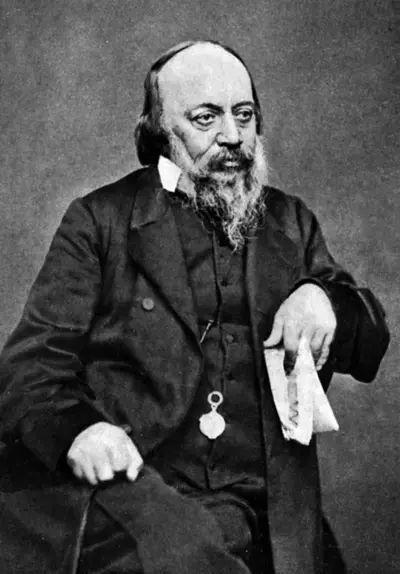
Sir Edwin Chadwick KCB was an English social reformer who is noted for his leadership in reforming the Poor Laws in England and instituting major reforms in urban sanitation and public health. A disciple of Utilitarian philosopher Jeremy Bentham, he was most active between 1832 and 1854; after that he held minor positions, and his views were largely ignored. Chadwick pioneered the use of scientific surveys to identify all phases of a complex social problem, and pioneered the use of systematic long-term inspection programmes to make sure the reforms operated as planned.
