Nicholas II Quotes
No law shall be enforced without the approval of the Duma [parliament].
The Czar, a total autocrat, was out of touch with most of the civilized world. Under much pressure from his advisors who realized that there was much unhappiness with an autocracy, the Czar made this reform which seemed a major concession and was very much welcomed by the people. However, it had relatively little practical effect. The Duma could not make laws, they could only ratify those made by the Czar and his ministers. However, few members of the Duma were willing to vote against a measure that the Czar wanted. It had no practical effect on improving the standard of living and the economic development of a backward empire.
Nicholas II, 1868-1918, Last Czar of Russia, Edict giving some rights to the representatives of the people, October 30, 1905
Sourced by: Eigen's Political and Historical Quotations


Responding to a journalists question of whether he understood a bill he had just voted upon:

This is the earliest surviving attempt of the Romans to formulate a legal code.

In the English system there is no “separation of powers”. Parliament makes the laws and its ministers execute them. The highest judges are members of Parliament (the House of Lords) as well. So Lord Bereford was in the legislature when the statute was debated and passed.


as a result of the Watergate hearings and investigations and proceedings


In 1628 Parliament, in response to abuses by King Charles I, was about to pass The Petition of Rights–-a type of Bill of Rights. The King gave assurances that the practices—such as forcing nobles to lend him money—would not continue and didn't want to be embarrassed by passage of a law which he claimed would indicate that the Parliament did not trust him and weaken the dignity of the monarchy. The Petition of Rights passed with Cole’s leadership.


See John Marshall's later (1803) use of the concept and term "repugnant." {606483}


This clause was a throwback to the days before the separation of powers where the legislature could imprison anyone they thought contemptuous or interfering with their deliberation. Contrast this with the earlier constitution of Massachusetts which forbade the legislature from acting as a judge or prosecutor. See {616750} and {616749}. Also this was a clear invasion of freedom of the press and freedom of speech provided by the Bill of Rights. However, at the time, it was not clear that the Federal Constitution was binding on State Governments on State Matters. Modern law is still ambiguous on this general point, but not on freedom of speech and the press which is currently definitely binding on the states.
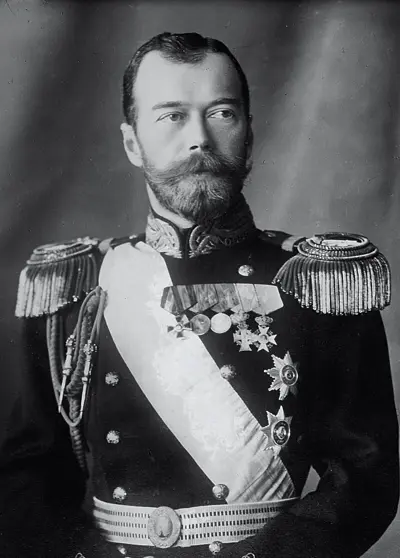
Nicholas II or Nikolai II Alexandrovich Romanov, known in the Russian Orthodox Church as Saint Nicholas the Passion-Bearer, was the last Emperor of All Russia, ruling from 1 November 1894 until his abdication on 15 March 1917. During his reign, Russia embarked on a series of reforms including the introduction of civil liberties, literacy programs, state representation, and initiatives to modernize the empire's infrastructure. Ultimately, this progress was undermined by Nicholas's commitment to autocratic rule, as well as defeats sustained by the Russian military in the Russo-Japanese war and World War I. By March 1917, public support for Nicholas had collapsed and he was forced to abdicate the throne, thereby ending the Romanov dynasty's 300-year rule of Russia.
