Henry Peter Brougham Quotes
It is the duty of parliament to look at the men as well as the measures.
Baron Brougham and Vaux
Henry Peter Brougham, 1778-1868, Scottish Jurist & Member of Parliament (Whig), Speech, House of Commons, November 1830
Sourced by: Eigen's Political and Historical Quotations


He, in a speech to Parliament, had criticized the Iranian Judiciary on several counts, He was then reprimanded for doing so.


Responding to a journalists question of whether he understood a bill he had just voted upon:

In the Canadian, British and some other Parliamentary systems of government, the Prime Minister must appear weekly or periodically in the House of Commons and be subjected to any questions that are asked. He/she cannot claim Executive Privilege or simply not answer questions as in the American Presidential System.


In general, there are so many versions of a bill as it goes through the Congressional process, that the members of Congress do not read each and every draft. Some do not read any of the drafts and leave it to the Committee; others trust their staffs or their party leadership. More often they trust the lobbyists who donate to their campaigns. Sometimes, the bills are so large—many thousands of pages that the members of Congress lose track of all the aspects of the proposed law and only read a few sections in which they may have participated in debate. Often, the only people who read the entire bill are the lobbyists and one or two of committee staff.


In 1628 Parliament, in response to abuses by King Charles I, was about to pass The Petition of Rights–-a type of Bill of Rights. The King gave assurances that the practices—such as forcing nobles to lend him money—would not continue and didn't want to be embarrassed by passage of a law which he claimed would indicate that the Parliament did not trust him and weaken the dignity of the monarchy. The Petition of Rights passed with Cole’s leadership.


The Czar, a total autocrat, was out of touch with most of the civilized world. Under much pressure from his advisors who realized that there was much unhappiness with an autocracy, the Czar made this reform which seemed a major concession and was very much welcomed by the people. However, it had relatively little practical effect. The Duma could not make laws, they could only ratify those made by the Czar and his ministers. However, few members of the Duma were willing to vote against a measure that the Czar wanted. It had no practical effect on improving the standard of living and the economic development of a backward empire.


as a result of the Watergate hearings and investigations and proceedings
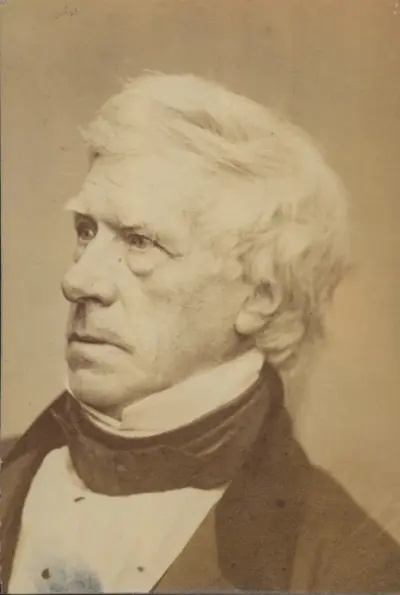
Henry Peter Brougham, 1st Baron Brougham and Vaux, PC, QC, FRS was a British statesman who became Lord High Chancellor and played a prominent role in passing the 1832 Reform Act and 1833 Slavery Abolition Act.
