John MacDonald Quotes
Parliament is a grand inquest which has the right to inquire into anything and everything.
John A. MacDonald, 1815-1891, First Canadian Prime Minister (Conservative), Speech 1861
Sourced by: Eigen's Political and Historical Quotations


He, in a speech to Parliament, had criticized the Iranian Judiciary on several counts, He was then reprimanded for doing so.

Responding to a journalists question of whether he understood a bill he had just voted upon:

When requested to have the assembly remove items in the proposed constitution at the last minute:


In the English system there is no “separation of powers”. Parliament makes the laws and its ministers execute them. The highest judges are members of Parliament (the House of Lords) as well. So Lord Bereford was in the legislature when the statute was debated and passed.


In a celebrated case involving the right of the U. S. House of Representatives' Un-American Activities Committee to "expose" someone as a Communist, Mr. Justice Brennan wrote:

as a result of the Watergate hearings and investigations and proceedings


In the Canadian, British and some other Parliamentary systems of government, the Prime Minister must appear weekly or periodically in the House of Commons and be subjected to any questions that are asked. He/she cannot claim Executive Privilege or simply not answer questions as in the American Presidential System.

In the English system the checks and balances of the American system are not present. Historically in England the Monarch and the Parliament acted as checks upon each other. With a Constitutional Monarch there is no institutional check on Parliament. The checks are their restraint--respect for precedent--and the voters. The Prime Minister is a member of Parliament and has no powers other than what Parliament gives him/her. The courts in England are under Parliament and the upper house, the House of Lords is the equivalent of the highest court—but it may always be overruled by the parliament itself.


This is the justification of virtually all legislatures that exempt their members from general requirements of law or grant them special privileges. Occasionally, the justification is warranted; most often, not.


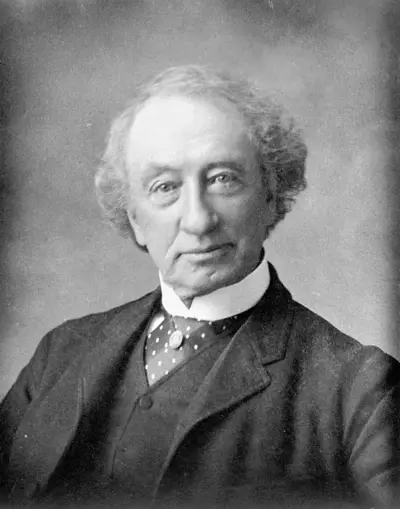
Sir John Alexander Macdonald GCB PC QC was the first prime minister of Canada (1867–1873, 1878–1891). The dominant figure of Canadian Confederation, he had a political career that spanned almost half a century. Macdonald was born in Scotland; when he was a boy his family immigrated to Kingston in the Province of Upper Canada (today in eastern Ontario). As a lawyer, he was involved in several high-profile cases and quickly became prominent in Kingston, which elected him in 1844 to the legislature of the Province of Canada. By 1857, he had become premier under the colony's unstable political system.
