Ulysses Guimaraes Quotes
I am president of Congress, not the director of an insane asylum.
When requested to have the assembly remove items in the proposed constitution at the last minute:
Ulysses Guimaraes, President (Majority Leader), Brazilian National Congress, Quoted in New York Times, July 28, 1988
Sourced by: Eigen's Political and Historical Quotations


The Constitution sets the majority of each house as a quorum in order to conduct any business. Minorities, in order to obstruct proceedings, would often refuse to answer their names when a quorum call would made even though they were present in the House, Therefore they claimed they could not be counted towards a quorum. In those days there were always absences due to illness, transportation, family emergencies and the like. So the majority had to have most of its members on the floor at all times if the minority wanted too obstruct. The minority claimed it was their right under the Constitution, Reed said that interpreting the Constitution that way was tantamount to suicide for the House. He then changed the rule, and simply counted as present any member who was observed to be present, whether he answered a quorum call or not.


Although his primary occupation was as a political columnist, he was also a physician and psychiatrist. The desire and ambition for so much power is not typical of most people and the willingness to pay the personal cost to try and attain that position tends to take all Presidential candidates out of the Normal range of American citizens.

The senator had broken with his own party on the issue of slavery in the territories.


In 2012 the Republicans controlled the House but not the Senate or the White House. As the nation grows, the Congressionally voted budgets have implications and the budget ceiling has to be raised to balance the two. That had always been a bipartisan process over the life of the nation. However, the Republicans in the House decided that they would hold the debt ceiling legislation hostage to pressure the Senate and the White House to pass legislation that the majority of the Senate and the President thought was bad for the country. Krugman advised the President and the Senate to resist giving in to this blackmail even if the debt ceiling was hostage to their demands.


The Congress over the last century has ceded much of its Constitutional power to the President. Congress has much power to check the President, but just as Congress has not been very competent at legislating, oversight, and conducting hearings and investigations, it has not organized itself to use the powers it has very well.


Alberto Gonzalez, White House Counsel and later Attorney General who was forced to resign and David S. Addington, Counsel to the Vice President, had come up with a novel view of the powers of the presidency. They argued that since the President is the Commander in Chief, in a war situation or intelligence gathering thereto, has the Constitutional responsibility for that function, he need not obey any laws of Congress as in the conduct of the war Congress would be impinging on the Constitutional separation of powers which itself was prohibited by the Constitution. The argument did not find any significant legal support but for a while the George W. Bush White House behaved as if this were the law, despite the fact that even in the American Revolution and the War of 1812 Congress passed laws regulating the conduct of the armed forces as is provided for in other parts of the Constitution. Yet even Goldsmith would allow the President some powers that many think are unconstitutional and/or belong to Congress. See {32436}.


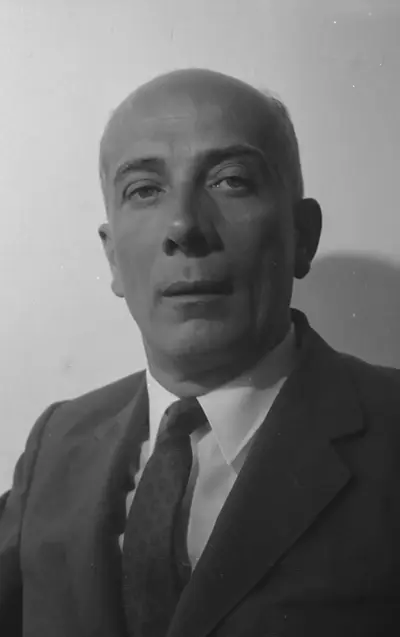
Ulysses Silveira Guimarães was a Brazilian politician and lawyer who played an important role in opposing the military dictatorship in Brazil and in the fight to restore democracy in the country. He died in a helicopter accident by the shore near Angra dos Reis, in the south of Rio de Janeiro state.
