William Blount Quotes
When a treaty must depend for its execution ... on a law or laws to be passed by Congress ... it is the Constitutional duty of the House of Representatives to deliberate on the expediency of carrying such treaty into effect.
William Blount, 1749-1800, Member of the Continental Congress, U. S. Senator (TN), Resolution of the House of Representatives, 1796
Sourced by: Eigen's Political and Historical Quotations

His main reason for believing this is that all appropriations bills must be initiated by the House of Representatives. Lobbyists therefore often give the House more attention than the Senate.


The Chairmen of the Committees then had tremendous, almost unilateral power. The chairman reached seniority by being elected over and over and had little opposition. At the time they were almost all older Democratic Congressmen from the "Solid South", very conservative and still racists despite the 1964 Civil Rights Act. They were outraged when a Freshmen member of Congress who rarely made a public statement, took on the most powerful members of the House and wanted to reform the Seniority. But Ms. Chisholm was a teacher in her professional life, and by challenging the seniority system and attracting the enmity of most of the Chairmen, the media and the public started to cover the dispute and Chisholm explained to America exactly how the system worked and how undemocratic and racist it was. Her effort put the Seniority System on the public agenda, and reforms evolved over the next decades." She was the first Black woman to be elected to Congress and was the first Black woman to actively campaign for the Presidency


The Czar, a total autocrat, was out of touch with most of the civilized world. Under much pressure from his advisors who realized that there was much unhappiness with an autocracy, the Czar made this reform which seemed a major concession and was very much welcomed by the people. However, it had relatively little practical effect. The Duma could not make laws, they could only ratify those made by the Czar and his ministers. However, few members of the Duma were willing to vote against a measure that the Czar wanted. It had no practical effect on improving the standard of living and the economic development of a backward empire.


Two years later with bipartisan support Speaker Joseph Cannon was stripped of his party and the Rules Committee was created.

It didn't take long in early America for legislative caucuses to spring up:


Jackson was then a U. S. Senator

When the Senate was debating the Gulf of Tonkin Resolution, which would empower the President to take "all necessary measures" to repel any armed attack on U. S. forces, Senator Morse was one of only two Senators opposing the resolution:


The Bill of Rights only has 10 amendments. These are the two that did not get ratified by the states.
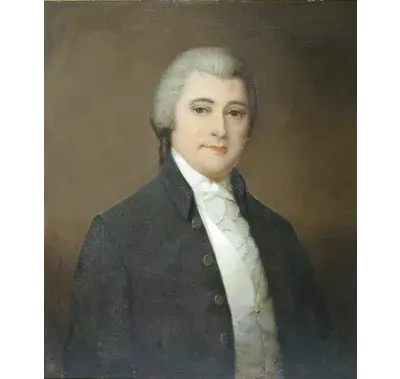
William Blount was an American statesman and land speculator who signed the United States Constitution. He was a member of the North Carolina delegation at the Constitutional Convention of 1787 and led the efforts for North Carolina to ratify the Constitution in 1789 at Fayetteville. He then served as the only governor of the Southwest Territory and played a leading role in helping the territory gain admission to the Union as the State of Tennessee. He was selected as one of Tennessee's initial United States Senators in 1796.
