Arlen Specter Quotes
We will submit legislation to the United States Senate which will...authorize the Congress to undertake judicial review of those signing statements with the view to having the president's acts declared unconstitutional.
United States. Cong. Senate. Committee on the Judiciary. Hearing on Presidential Signing Statements. 109th Cong., 2nd sess. Washington: GPO, 2006.


When the Senate was debating the Gulf of Tonkin Resolution, which would empower the President to take "all necessary measures" to repel any armed attack on U. S. forces, Senator Morse was one of only two Senators opposing the resolution:


Marshall is famous for, as Chief Justice, establishing the principle that the Judiciary can override Congress and the Executive in determining Constitutionality. However, as this quotation illustrates this principle had been discussed in open debate on the ratification of the Constitution. It was not simply a grab for power by a Chief justice; he uttered this quotation long before he ever suspected he would be a judge but actually spent much of his career in the executive and legislative branch of government.


In 1953 the Senator had proposed a Constitutional amendment that would severely curtail the treaty making powers of the President. President Eisenhower actively opposed Bricker and the right wing of his own party. The Senator was outraged. Despite Bricker’s complaining, the public and the Congress sided with the President.


This was an insult to the George W. Bush administration which had stretched the Constitution more so than any previous administration, had asserted Presidential powers that had never been asserted before and had had several of its more controversial policies and practices overturned by the Supreme Court.


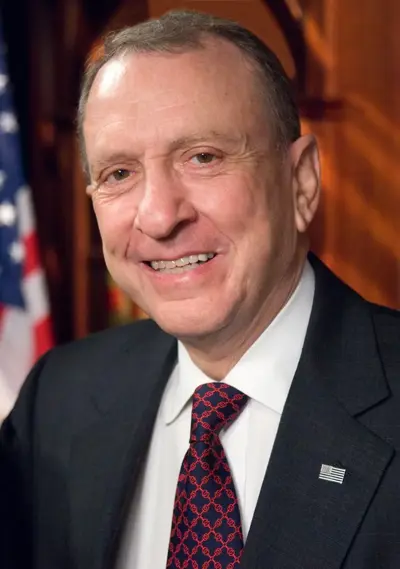
Arlen Specter was an American lawyer, author, and politician who served as a United States Senator from Pennsylvania from 1981 to 2011. Specter was a Democrat from 1951 to 1965, then a Republican from 1965 until 2009, when he switched back to the Democratic Party. First elected in 1980, he represented Pennsylvania in the U.S. Senate for 30 years.
