Edwin Meese Quotes
It should be remembered that the president cannot, by executive order, do things that affects the public at large unless there is some Congressional basis for it.
Meese, Edwin. Interview regarding Executive Orders. Fox News, 2014.


This was the President’s original role regarding legislation. However, in the 20th century, Presidents have become more active and suggest laws and often initiate the process and then end it by signing the law that he suggested and shepherded through the Congress. But this was never the vision of the Founding Fathers, but since it is not addressed in the Constitution is not an unconstitutional process.


President Abraham Lincoln had pocket vetoed his own party's reconstruction bill in the midst of an election year.


The view that the Supreme Court was the final arbiter of constitutional controversies was not held in early America.


When the Senate was debating the Gulf of Tonkin Resolution, which would empower the President to take "all necessary measures" to repel any armed attack on U. S. forces, Senator Morse was one of only two Senators opposing the resolution:

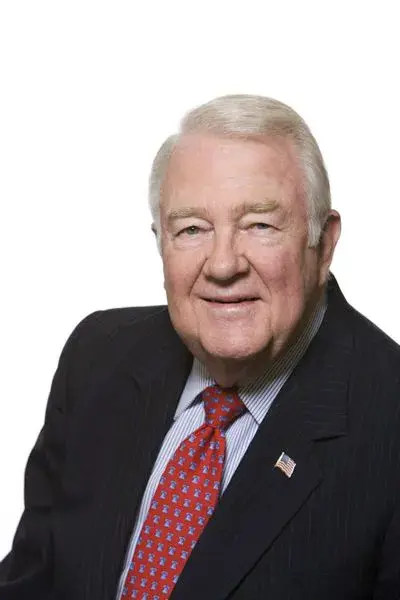
Edwin Meese III is an American attorney, law professor, author and member of the Republican Party who served in official capacities within the Ronald Reagan Gubernatorial Administration (1967–1974), the Reagan presidential transition team (1980–81) and the Reagan White House (1981–1985), eventually rising to hold the position of the 75th United States Attorney General (1985–1988), a position from which he resigned following the Wedtech scandal.
