Hillary Clinton Quotes
… take the Constitution out of cold storage!
This was an insult to the George W. Bush administration which had stretched the Constitution more so than any previous administration, had asserted Presidential powers that had never been asserted before and had had several of its more controversial policies and practices overturned by the Supreme Court.
Hillary Rodham Clinton, First Lady (William Clinton), U. S. Senator (Democrat, NY), Democratic Presidential Nomination Campaign Statement, January 2008, Campaign Speech, Louisville, KY, March 30, 2008
Sourced by: Eigen's Political and Historical Quotations

Powell was the Secretary of State and Addington kept advising the administration that as long as the President was acting in defense of the country in his capacity as Commander in Chief, he did not have to obey any existing laws that had been Constitutionally passed which in the opinion of the President restricted or limited the President or the executive branch. Addington was an attorney and Assistant to the Vice President, but he was given much responsibility for administration policy. Powell the Secretary of State of the Administration could not have disagreed more and although most politicians including Republicans disagreed with the Addington thesis, Powell was one of the few Republicans to criticize the Addington position.

President George W. Bush had ignored a federal law and tapped the phones of Americans without probable cause and a warrant issued by a court. The President’s defenders argued that the President, as Commander in Chief, has the Constitutional responsibility to lead the military and protect the nation. Intelligence gathering is part of military activity. Therefore the intelligence gathering is a Constitutional duty and the Congress, under the separation of powers doctrine, may not interfere with the President’s Constitutional Duty to conduct intelligence. Under this doctrine, the President need not obey laws that he believes impinge on his management of the war effort and the defense of the nation. Most legal scholars believe that this argument is nonsense, but the George W. Bush administration has stated the doctrine and it was the subject of much litigation.


The President had authorized the NSA to spy Americans who might have been suspected of being themselves or being in contact with terrorists without obtaining permission of a court including the Foreign Intelligence Surveillance Act (FISA) special court that had been established for these cases. Instead the administration argues that it was inherent in the powers of the Presidency in time of war.


He had been fired by the George W. Bush White House because he would not rush an indictment against a democratic politician to make the newspapers before the election that year thus being “loyal” to the party and administration.

Bush, more so than any other president, claimed executive powers that had never been claimed by other presidents even in wartime. At the time the senator made this statement, the Supreme Court had ruled against the President on several of his claims and others were pending. The powers ranged from the right to hold even American Citizens incommunicado without filing any charges or going before a court or even allowing a court to review the action if the President Claims the person was an “enemy combatant” or “terrorist”; to the right to spy on American Citizens phone calls in America without any court review and even went so far as to claim the right to question Americans or other suspected enemies by methods that are classified as “torture” by most nations and is even illegal by the American Military Regulations for interrogating prisoners.
Despite Ziglar’s and other officials pointing out the illegality, illegal sweeps and arrests were made without warrants or constitutional requirements.
The Congress over the last century has ceded much of its Constitutional power to the President. Congress has much power to check the President, but just as Congress has not been very competent at legislating, oversight, and conducting hearings and investigations, it has not organized itself to use the powers it has very well.


TR had a Supreme Court where a conservative block was in the majority and declared a number of his key reforms as unconstitutional. The same thing happened to FDR as well. Since Supreme Court justices had lifetime tenure most presidents and congresses have to deal with a court that has the political makeup and political philosophy of previous administrations by which they were appointed. Reform and change presidents tend to see the Supreme Court as obstructionist.
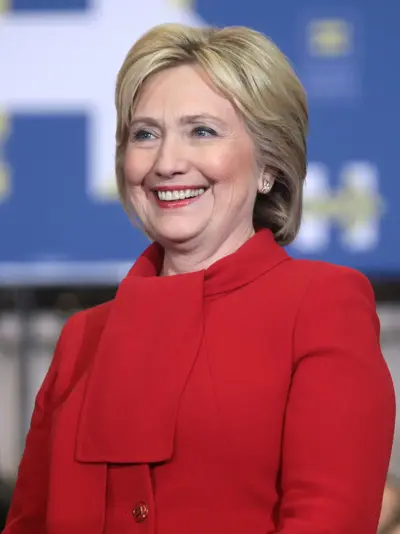
Hillary Diane Rodham Clinton is an American politician, diplomat, lawyer, writer, and public speaker who served as the 67th United States secretary of state from 2009 to 2013, as a United States senator from New York from 2001 to 2009, and as First Lady of the United States from 1993 to 2001. Clinton became the first woman to be nominated for president of the United States by a major political party when she won the Democratic Party nomination in 2016. She was the first woman to win the popular vote in an American presidential election; however, she failed to win the Electoral College.
