Russ Feingold Quotes
This administration has made the worst assault on the Constitution perhaps in the history of America…. It has weakened America at a time that we have to be strong.
Bush, more so than any other president, claimed executive powers that had never been claimed by other presidents even in wartime. At the time the senator made this statement, the Supreme Court had ruled against the President on several of his claims and others were pending. The powers ranged from the right to hold even American Citizens incommunicado without filing any charges or going before a court or even allowing a court to review the action if the President Claims the person was an “enemy combatant” or “terrorist”; to the right to spy on American Citizens phone calls in America without any court review and even went so far as to claim the right to question Americans or other suspected enemies by methods that are classified as “torture” by most nations and is even illegal by the American Military Regulations for interrogating prisoners.
Russ Feingold, U. S. Senator (Democrat, WI), Description of George W. Bush and his administration, NBC Meet the Press, July 22, 2007
Sourced by: Eigen's Political and Historical Quotations

This was an insult to the George W. Bush administration which had stretched the Constitution more so than any previous administration, had asserted Presidential powers that had never been asserted before and had had several of its more controversial policies and practices overturned by the Supreme Court.

Barstow the Democratic Governor who had no serious opposition in 1853 found himself challenged for reelection by Coles Bashford of the new Republican Party. The Board of Canvassers reported that Governor Barstow had won reelection but by less than 200 votes in the whole state. The Republicans charged that there had been fraud in some of the rural districts and petitioned the Wisconsin Supreme Court which ruled that nonexistent precincts had indeed voted for the Governor. The Barstow forces however refused to recognize the decisions of the court claiming that the court had no jurisdiction over the Board of Canvassers who were part of the executive branch. The Republicans held their own inauguration and two men claimed to be Governor. But the Governor claimed that the state constitution did not give the court any authority to deal with the crisis, He even called out the State Militia to maintain his office and intimidate the Supreme Court and keep the “other governor” from the state house. Nonetheless the court ruled that even the Governor had to obey the law and the Supreme Court would determine what the law was. Barstow finally “resigned.” See {587915} & {587914}.


Powell was the Secretary of State and Addington kept advising the administration that as long as the President was acting in defense of the country in his capacity as Commander in Chief, he did not have to obey any existing laws that had been Constitutionally passed which in the opinion of the President restricted or limited the President or the executive branch. Addington was an attorney and Assistant to the Vice President, but he was given much responsibility for administration policy. Powell the Secretary of State of the Administration could not have disagreed more and although most politicians including Republicans disagreed with the Addington thesis, Powell was one of the few Republicans to criticize the Addington position.

Senator Church was the chairman of the committee. It’s reports (14 in all) are the most extensive documentation of U. S. intelligence ever compiled.


There have been many examples of Presidents in time of war who have asked Congress & received additional powers whose constitutionality was sometimes tested. The Alien & Sedition acts of the John Adams administration, Lincoln in the Civil War controlling the Southern governments, Wilson jailing people verbally opposing the draft, FDR incarcerating Japanese Americans in WWII. However, in those cases, the President asked for and got the powers from Congress. Nichols claimed that by Bush, just assuming powers, he was acting like a king & not a president, and that per se was an impeachable offence. As unpopular as Bush was, his Vice President was much moreso, & Bush was in his last term; neither party wanted to go through another impeachment after the Republican attempt to oust William Clinton ended in acquittal. Other constitutional scholars do not believe the “acting like a king” rises to the level of an impeachable offense; only specific “high crimes & misdemeanors” would qualify.

President George W. Bush had ignored a federal law and tapped the phones of Americans without probable cause and a warrant issued by a court. The President’s defenders argued that the President, as Commander in Chief, has the Constitutional responsibility to lead the military and protect the nation. Intelligence gathering is part of military activity. Therefore the intelligence gathering is a Constitutional duty and the Congress, under the separation of powers doctrine, may not interfere with the President’s Constitutional Duty to conduct intelligence. Under this doctrine, the President need not obey laws that he believes impinge on his management of the war effort and the defense of the nation. Most legal scholars believe that this argument is nonsense, but the George W. Bush administration has stated the doctrine and it was the subject of much litigation.

Barstow the Democratic Governor who had no serious opposition in 1853 found himself challenged for reelection by Coles Bashford of the new Republican Party. The Board of Canvassers reported that Governor Barstow had won reelection but by less than 200 votes in the whole state. The Republicans charged that there had been fraud in some of the rural districts and petitioned the Wisconsin Supreme Court which ruled that nonexistent precincts had indeed voted for the Governor. The Barstow however refused to recognize the decisions of the court claiming that the court had no jurisdiction over the Board of Canvassers who were part of the executive branch. The Republicans held their own inauguration and two men claimed to be Governor. But the Governor claimed that the state constitution did not give the court any authority to deal with the crisis, He even called out the State Militia to maintain his office and intimidate the Supreme Court and keep the “other governor” from the state house. Nonetheless the court ruled that even the Governor had to obey the law and the Supreme Court would determine what the law was. Barstow finally “resigned.” See {587917} & {587914}.

President George W. Bush, to justify the invasion of Iraq had told the public that the Iraqi regime was developing nuclear weapons and other weapons of mass destruction, and had participated in the September 11 attack on the United States by assisting Al Qaeda. It turned out that these statements were false. The administration claimed that their error was well intentioned and the result of faulty intelligence. Opponents claimed that the administration officials knew that they were exaggerating and had pressured the intelligence agencies to create intelligence conclusions that supported their story.

President George W. Bush, to justify the invasion of Iraq had told the public that the Iraqi regime was developing nuclear weapons and other weapons of mass destruction, and had participated in the September 11 attack on the United States by assisting Al Qaeda. It turned out that these statements were false. The administration claimed that their error was well intentioned and the result of faulty intelligence. Opponents claimed that the administration officials knew that they were exaggerating and had pressured the intelligence agencies to create intelligence conclusions that supported their story.


The Roosevelt administration had stemmed the tide of Hoover’s Great Depression but the nation had not yet recovered. The New Deal measures, most of which would be considered fundamental to good government 50 years later was being constantly thwarted by a Supreme Court with a strong arch conservative majority headed by James McReynolds, a virulent, overt, anti-Semitic racist, who hated FDR—see {616652} and {585241}. The situation was to many like that which existed before the Civil War when the Court rendered the Dred Scott decision that so harmed the nation. Frankfurter, not then a Supreme Court Justice, urged Roosevelt to do something lest the American Public lose all respect for the Court and our Constitutional system and have the nation harmed by not allowing reforms like child labor laws to go through. The court actually ruled by a narrow majority that the government could not pass laws making it illegal for 11 year old children to work in coal mines or factories. FDR attempted to add more justices turning the majority into a majority—“packing the Supreme Court”, but that politically backfired. Some of the reforms never went through while others needed Constitutional Amendments like the end to Prohibition.


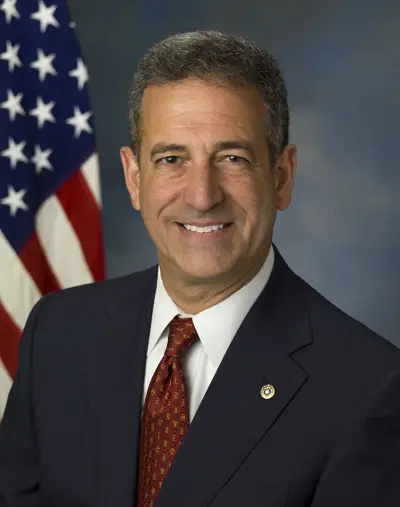
Russell Dana Feingold is an American lawyer and politician who served as a United States Senator from Wisconsin from 1993 to 2011. A member of the Democratic Party, he was its nominee in the 2016 election for the same U.S. Senate seat he had previously occupied. From 1983 to 1993, he was a Wisconsin State Senator representing the 27th District.
