Herman P. Eberharter Quotes
The people never have and never will be able to understand how the will of a majority of the House of Representatives can be set aside by the judgment of a few men on a powerful committee.
Herman P. Eberharter, 1892-1958, U. S. Congressman (Democrat, PA), Letter to other Congressmen regarding introduction of the "21-day rule" in the House Rules Committee, December 1948
Sourced by: Eigen's Political and Historical Quotations

The Chairmen of the Committees then had tremendous, almost unilateral power. The chairman reached seniority by being elected over and over and had little opposition. At the time they were almost all older Democratic Congressmen from the "Solid South", very conservative and still racists despite the 1964 Civil Rights Act. They were outraged when a Freshmen member of Congress who rarely made a public statement, took on the most powerful members of the House and wanted to reform the Seniority. But Ms. Chisholm was a teacher in her professional life, and by challenging the seniority system and attracting the enmity of most of the Chairmen, the media and the public started to cover the dispute and Chisholm explained to America exactly how the system worked and how undemocratic and racist it was. Her effort put the Seniority System on the public agenda, and reforms evolved over the next decades." She was the first Black woman to be elected to Congress and was the first Black woman to actively campaign for the Presidency


Two years later with bipartisan support Speaker Joseph Cannon was stripped of his party and the Rules Committee was created.


Morris had it wrong. He perceived that the Senate could not be a check on the House or the President because to him, the Senate was the house of aristocrats and America really did not have aristocrats since there was no nobility so that there would be no difference between Representatives and Senators-–they both were drawn from the same egalitarian population. He missed however that the Senate, being elected by states, would represent a broader constituency than a member of the House, and because of this broader perspective, would come to see issues in nationalist and state terms while Representatives would perceive the same issues in local terms. Hence the two houses of Congress became effective checks on each other, and the Senate on the President because not of different social or economic class, but of broader and narrower perspectives. It was not what Senators were but what they would become once they were elected and had to be reelected.

The House Rules Committee had evolved into a very powerful committee which controlled the debate rules of every piece of legislation that came before the House. This Congress—the worst in American History—passed fewer bills than any other. Those that ever got out of the Rules Committee had Rules that prohibited the minority from even offering amendments.


Since Theodore Roosevelt, the Presidency has become stronger and Congress weaker. The original idea of the framers of the Constitution was to have three co-equal branches of government. However Gingrich was so partisan on this point that he lost most of his credibility and lost his position of leadership in the House. He was constantly asserting the power of the House against Democratic President Bill Clinton while he never had when Republican George W. Bush was President. His house impeached President Clinton on charges emanating from Clinton’s sexual foibles and effort to keep his predilections secret. This not only impeded government for a long time, but angered the public. In the end the Republican Controlled House could not even get a majority of the Republican controlled Senate to vote against Clinton, much less the super-majority the rules required. Ironically, by the second term of George W. Bush’s administration most members of Congress and the American public had thought the Presidency had gotten to powerful relative to Congress and Gingrich’s objective became a national one, but Gingrich himself had been discredited and was completely out of office.

The then rules of the House gave the speaker control of what legislation was introduced.

At the time the power and prestige of Congress relative to the Presidency , was much greater than it is today. It was McKinley’s successor, Theodore Roosevelt, who began a 20th century trend which led to a reversal of the relationship between the Executive Branch and the Legislative.

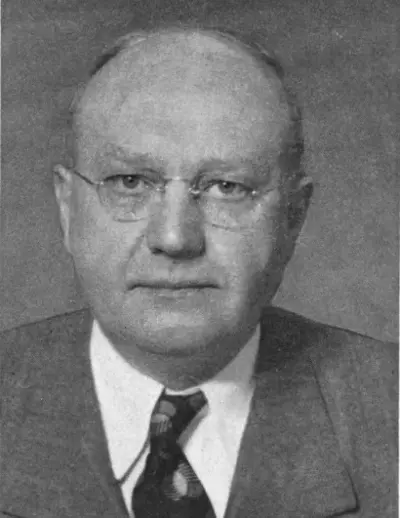
Herman Peter Eberharter was a Democratic member of the U.S. House of Representatives from Pennsylvania.
