James A. Bayard Jr. Quotes
The political party having the majority ... [will] necessarily control all the committees ... because they ... must, as a party, protect themselves against the chance of the control of the business of the body going into the hands of their opponents.
James A. Bayard Jr., 1799-1880, U. S. Congressman & Senator (Democrat, DE), Quoted in The Congressional Globe, 1857
Sourced by: Eigen's Political and Historical Quotations


In one of the most blatant statements of the arbitrary power of congressional committee chairmen, the chairman of the House Rules Committee blocked an investigation of military procurement even though every other member of the committee wanted to pursue the investigation. The prerogative of the chairman was upheld by the Speaker, and on appeal, by the House as a whole, but by 1924 House rules were amended to diminish the arbitrary power of chairmen.

The Chairmen of the Committees then had tremendous, almost unilateral power. The chairman reached seniority by being elected over and over and had little opposition. At the time they were almost all older Democratic Congressmen from the "Solid South", very conservative and still racists despite the 1964 Civil Rights Act. They were outraged when a Freshmen member of Congress who rarely made a public statement, took on the most powerful members of the House and wanted to reform the Seniority. But Ms. Chisholm was a teacher in her professional life, and by challenging the seniority system and attracting the enmity of most of the Chairmen, the media and the public started to cover the dispute and Chisholm explained to America exactly how the system worked and how undemocratic and racist it was. Her effort put the Seniority System on the public agenda, and reforms evolved over the next decades." She was the first Black woman to be elected to Congress and was the first Black woman to actively campaign for the Presidency

In 1871 the congressman refused to serve as chairman of a committee to investigate the Ku Klux Klan. Such pandering to the South was common for politicians who had national aspirtation. If the politican served on such a committee, he would have to aknowledge the existance of the murders, torture, and other criminal activity of an organzation that was very popular in the South. Or he would have to cover up the KKK crimes and lose the support of Northerners. So refusing to serve on the committee was the prudent solution.


The senator had broken with his own party on the issue of slavery in the territories.

In the struggle for political power, this is often forgotten. During the Barak Administration, the President proposed measures that had been introduced and supported by his Republican opponents earlier. But they then not only failed to support them but often filibustered in the Senate to block them. The Democrats failed to support some of their ideas when President Eisenhower introduced them.


Senator Conkling was the Republican Leader of the Republican Party and a party boss of the old school. Hays was a reformer, especially about appointments where he generally tried to pick the most meritorious candidate instead of the party loyalists desired by Conkling. There was (and still is) a tradition in the Senate that the Senators from the state of residence of any Presidential appointment had a veto of any Federal appointments in the state. Conkling, in addition to being the party leader, was the senior senator from New York and wanted two party loyalists for the jobs. Hayes appointed the better qualified men and decided to fight for the nomination of his candidates, but expected tha Conkling was strong enough to assure that the Senate would not confirm Hayes’ New York appointments. See {622341} for the outcome.


If a party controls one of the two houses of Congress, they can block any legislation. But governing involves passing legislation, and in our bi-cameral Congress, control of one house is not sufficient to pass legislation.

The speaker was having trouble with some of his own party members in passing the President's budget. The press wanted to know when he would bring the budget to a vote.

The House Rules Committee had evolved into a very powerful committee which controlled the debate rules of every piece of legislation that came before the House. This Congress—the worst in American History—passed fewer bills than any other. Those that ever got out of the Rules Committee had Rules that prohibited the minority from even offering amendments.

If the member stays around Capitol Hill in a close vote, he/she will be found by members of the White House staff and the Party Leadership and enormous pressure will be brought to bear to have a change of vote. After a day or so, the member can return and everyone is on to other things.


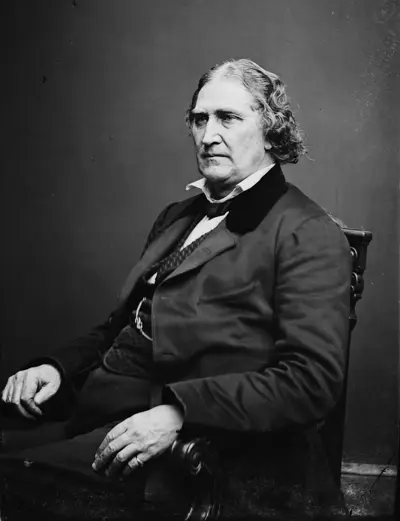
James Asheton Bayard Jr. was an American lawyer and politician from Delaware. He was a member of the Democratic Party and served as U.S. Senator from Delaware.
