Thomas Carlyle Quotes
There is one thing, too apt to be forgotten, which it much behooves us to remember: In the Colonies, as everywhere else in this world, the vital point is not who decides, but what is decided on!
In the struggle for political power, this is often forgotten. During the Barak Administration, the President proposed measures that had been introduced and supported by his Republican opponents earlier. But they then not only failed to support them but often filibustered in the Senate to block them. The Democrats failed to support some of their ideas when President Eisenhower introduced them.
Thomas Carlyle, 1795-1881, Scottish essayist and historian, Member of Parliament, The New Downing Street, April 15, 1850
Sourced by: Eigen's Political and Historical Quotations


This is an interesting variation of the FDR quotation regarding the President and Congress.


This was in effect a “Real Estate Promotional Document. Democracy, self government, and the right to set their own taxes were major selling points. See {611572} and {611571} for other “features.”

His use of the noun “Democracy” refers not to a form of government but the specific institution of the Democratic Party. Smith, like many of the Founding Fathers was deeply suspicious of political parties. See also {614907}. Smith had written to most of the then likely Presidential candidates of both major parties asking for their position on the Mormons who were facing persecution wherever they went. None of the politicians would make any satisfactory commitments. Smith took Direct Action and became the only major religious official to have run for the Presidency of the United States until Pat Robertson tried and failed in 2000. Smith’s assassination shortly thereafter cut his run for the Presidency short before it made much headway and politically he had no chance to affect the race.


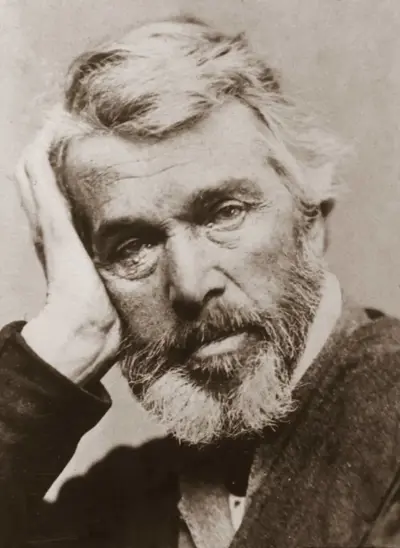
Thomas Carlyle was a Scottish historian, satirical writer, essayist, translator, philosopher, mathematician, and teacher. In his book On Heroes, Hero-Worship, and The Heroic in History (1841), he argued that the actions of the "Great Man" play a key role in history, claiming that "the history of the world is but the biography of great men". Other major works include The French Revolution: A History, 3 vols (1837) and The History of Friedrich II of Prussia, Called Frederick the Great, 6 vols (1858–65).
