Albert Bushnell Hart Quotes
The participation of the people in their own government was the more significant, because the colonies actually had what England only seemed to have, - three departments of government.
Hart, Albert Bushnell. Formation of the Union, 1750-1829. Longmans, Green, and Co., 1892, p. 15.


Actually the Iroquois had a very sophisticated system of regular laws and government some of which was incorporated into our Constitution. However, the Iroquois sided with the British in the American Revolution and at its conclusion, most were driven out of their New York lands and became refugees in British Canada. So by 1816, the Iroquois, the most sophisticated, powerful and affluent of all the American Indian tribes were no longer consequential in America.


Lieber is best known because he was assigned by President Lincoln to study the then international laws of war and prepare a manual for the guidance of union troops in the Civil War. Lincoln then issued the document as a general order.


Although opposed to monarchy himself, Langdon argued that a people had a right to select monarchical government if they chose. See {634001} for Rev. Dan Foster’s similar argument at in that period.

Garfield reminded Americans of how radical and unusual the concept of democracy had been at the time of the adoption of The Constitution, and that the American Revolution was one of ideas as well as armies.


Anthony Ashley Cooper


In the struggle for political power, this is often forgotten. During the Barak Administration, the President proposed measures that had been introduced and supported by his Republican opponents earlier. But they then not only failed to support them but often filibustered in the Senate to block them. The Democrats failed to support some of their ideas when President Eisenhower introduced them.


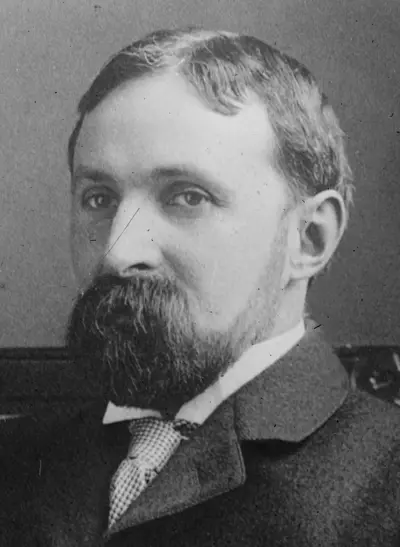
Albert Bushnell Hart was an American historian, writer, and editor based at Harvard University. One of the first generation of professionally trained historians in the United States, a prolific author and editor of historical works, Albert Bushnell Hart became, as Samuel Eliot Morison described him, "The Grand Old Man" of American history, looking the part with his "patriarchal full beard and flowing moustaches."
