Earl Warren Quotes
Logically, in a society ostensibly grounded on representative government, it would seem reasonable that a majority of the people in a State would elect a majority of that State’s legislators.
Earl Warren, 1891-1974, Chief Justice, U.S. Supreme Court, Governor of California (Republican), Republican Vice Presidential Candidate (with Dewey), Reynolds v. Sims
Sourced by: Eigen's Political and Historical Quotations


Two years later with bipartisan support Speaker Joseph Cannon was stripped of his party and the Rules Committee was created.


At the time the power and prestige of Congress relative to the Presidency , was much greater than it is today. It was McKinley’s successor, Theodore Roosevelt, who began a 20th century trend which led to a reversal of the relationship between the Executive Branch and the Legislative.


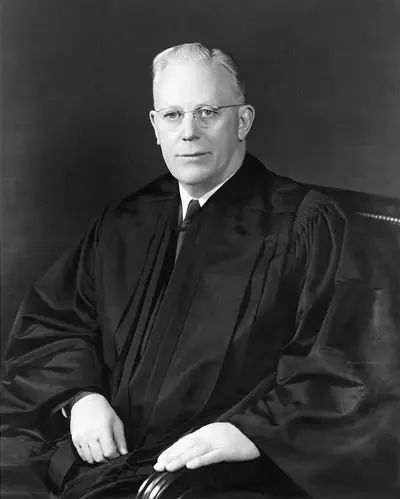
Earl Warren was an American politician and jurist who served as 30th governor of California from 1943 to 1953 and Chief Justice of the United States from 1953 to 1969. The "Warren Court" presided over a major shift in American constitutional jurisprudence, which has been recognized by many as a "Constitutional Revolution" in the liberal direction, with Warren writing the majority opinions in landmark cases such as Brown v. Board of Education (1954), Reynolds v. Sims (1964), Miranda v. Arizona (1966) and Loving v. Virginia (1967). Warren also led the Warren Commission, a presidential commission that investigated the 1963 assassination of President John F. Kennedy. He is the last chief justice to have served in an elected office before entering the Supreme Court, and is generally considered to be one of the most influential Supreme Court justices and political leaders in the history of the United States.
