John Stuart Mill Quotes
There is a character of mind which does not look up to any one; which thinks no other person's opinion much better than its own, or nearly so good as that of a hundred or a thousand persons like itself. Where this is the turn of mind of the electors, they will elect no one who is not or at least who does not profess to be, the image of their own sentiments, and will continue him no longer than while he reflects those sentiments in his conduct.
John Stuart Mill, 1806-1873, Member of Parliament, British Political Economist, Representative Government, 1861
Sourced by: Eigen's Political and Historical Quotations


She was one of the very few remaining bi Partisan Republicans. There had been a de facto purge of liberal Republicans from the party.


Originally it was published in Boston under the name “A Columbian Patriot.” The “principles to which she referred were the principles set out in our Constitution of 1787.


Then running for reelection as a state legislator.


At the time the power and prestige of Congress relative to the Presidency , was much greater than it is today. It was McKinley’s successor, Theodore Roosevelt, who began a 20th century trend which led to a reversal of the relationship between the Executive Branch and the Legislative.


In Dolgoff’s era, his argument was that the political parties were so powerful that it was they who controlled who held public office, not the voters. And the parties were controlled by a few party leaders. However, when the system was reformed in the latter part of the 20th century, the individual incumbent member of Congress in America was so hard to dislodge due to the role of money and the advantage of incumbency, that the class of professional politicians was still very powerful. Reform had reduced the control of political parties but not politicians.

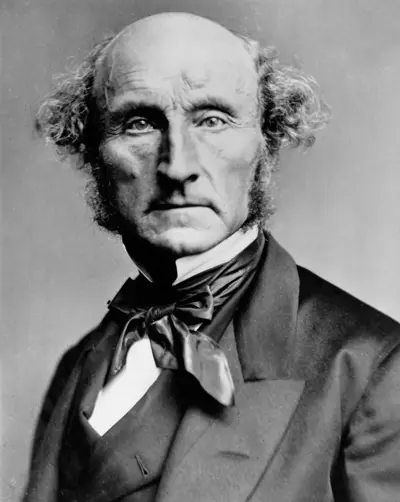
John Stuart Mill, usually cited as J. S. Mill, was an English philosopher, political economist, Member of Parliament, and civil servant. One of the most influential thinkers in the history of classical liberalism, he contributed widely to social theory, political theory, and political economy. Dubbed "the most influential English-speaking philosopher of the nineteenth century", he conceived of liberty as justifying the freedom of the individual in opposition to unlimited state and social control.
