Lord Acton Quotes
In England Parliament is above the law. In America the law is above Congress.
Acton, John Emerich Edward Dalberg. The History of Freedom and Other Essays. Edited by John Neville Figgis and Reginald Vere Laurence, Macmillan and Co., 1907.

One of the conundrums of our constitutional system is who has the last word as to what the Constitution means. Essentially it is the judicial branch headed by the Supreme Court. But there are those who believe that the current popular majority should have a say in what is or is not constitutional. If so the legislative branch should have the last word. Still others say that the President is the only person elected by ALL the people, so his opinion most reflects the will of the public. And then there are most who argue that the Constitutional system was created just to avoid the power of currently popular majorities, and the courts should decide based on the Constitution itself. So the statement has very little meaning except that Phillips thinks that the courts have too much power. Whoever gets to decide what is or is not Constitutional will be accused of being “over” the Constitution by those who don’t like the decisions. In our system, that is the courts.


This constitution was written 7 years before the national constitutional convention. It shows that there was concern about the separation of powers in United States even before the Constitution was drafted. See {616750} for an even clearer statement of the separation of powers principle.


This was the origin of John Adams famous quotation {592690}.


The Czar, a total autocrat, was out of touch with most of the civilized world. Under much pressure from his advisors who realized that there was much unhappiness with an autocracy, the Czar made this reform which seemed a major concession and was very much welcomed by the people. However, it had relatively little practical effect. The Duma could not make laws, they could only ratify those made by the Czar and his ministers. However, few members of the Duma were willing to vote against a measure that the Czar wanted. It had no practical effect on improving the standard of living and the economic development of a backward empire.
In the English system the checks and balances of the American system are not present. Historically in England the Monarch and the Parliament acted as checks upon each other. With a Constitutional Monarch there is no institutional check on Parliament. The checks are their restraint--respect for precedent--and the voters. The Prime Minister is a member of Parliament and has no powers other than what Parliament gives him/her. The courts in England are under Parliament and the upper house, the House of Lords is the equivalent of the highest court—but it may always be overruled by the parliament itself.


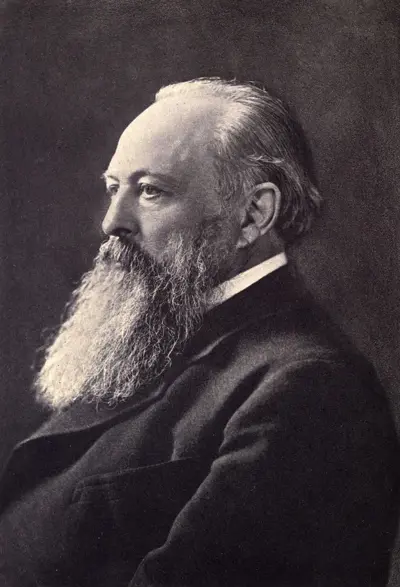
John Emerich Edward Dalberg-Acton, 1st Baron Acton, 13th Marquess of Groppoli, better known as Lord Acton, was an English Catholic historian, politician, and writer. He was the only son of Sir Ferdinand Dalberg-Acton, 7th Baronet, and a grandson of the Neapolitan admiral and prime minister Sir John Acton, 6th Baronet. Between 1837 and 1869 he was known as Sir John Dalberg-Acton, 8th Baronet.
