Albert Venn Dicey Quotes
The fact that the most arbitrary powers of the English executive must always be exercised under Act of Parliament places the government, even when armed with the widest authority, under the supervision, so to speak, of the Courts. …. Parliament is supreme legislator, but from the moment Parliament has uttered its will as lawgiver, that will becomes subject to the interpretation put upon it by the judges of the land.
Albert Venn Dicey, 1835–1922, British jurist and constitutional theorist, Introduction to the Study of the Law of the Constitution, 1915
Sourced by: Eigen's Political and Historical Quotations

Hatch was the chairman of the Senate Judiciary Committee at the time.

This constitution was written 7 years before the national constitutional convention. It shows that there was concern about the separation of powers in United States even before the Constitution was drafted. See {616750} for an even clearer statement of the separation of powers principle.

This concept of balance of power and the equal role of the judiciary is actually quite rare. Even in Parliamentary democracies the parliament can override any court interpretation. In England, the upper legislative house, the House of Lords, actually serves as the nation’s highest or supreme court. And these “Law Lords” can override all regular judicial bodies.


In 2002 the corrupt Indonesian Courts ruled that a very solvent Canadian company Manulife was bankrupt so that others could get control. The international financial and political community wanted the Indonesian government to intervene and reverse the rulings, but historically the courts had no independence and had been tools of the government.

Jefferson’s fears were later reinforced by John Marshall in Marbury v. Madison {606468}


The government of Pakistan regarded this as seditious. The Government can fire judges at will and the military has the right to convene its own courts and try Pakistani civilians for certain alleged crimes by removing their cases from the civilian courts. Even when a Pakistani judge is not intimidated by the government or the military, the Islamic extremist fanatics often assassinate any public official who any one of thousands of fanatics feels is anti-Islamic.

The New Deal liberal Democrats had complained that the Supreme Court was making national policy and law and not interpreting law. They tried to pack the Supreme Court by adding more justices who would be more sympathetic to the New Deal. (See {587549}.) At the beginning of the 21st century it was the conservative Republicans who were making the same claim that the Supreme Court was making law and not interpreting it. The pattern seems to be when the court votes for your side, they are interpreting the law. When they vote for the other side, they are activist—making law improperly.

One of the conundrums of our constitutional system is who has the last word as to what the Constitution means. Essentially it is the judicial branch headed by the Supreme Court. But there are those who believe that the current popular majority should have a say in what is or is not constitutional. If so the legislative branch should have the last word. Still others say that the President is the only person elected by ALL the people, so his opinion most reflects the will of the public. And then there are most who argue that the Constitutional system was created just to avoid the power of currently popular majorities, and the courts should decide based on the Constitution itself. So the statement has very little meaning except that Phillips thinks that the courts have too much power. Whoever gets to decide what is or is not Constitutional will be accused of being “over” the Constitution by those who don’t like the decisions. In our system, that is the courts.


The President had authorized the NSA to spy Americans who might have been suspected of being themselves or being in contact with terrorists without obtaining permission of a court including the Foreign Intelligence Surveillance Act (FISA) special court that had been established for these cases. Instead the administration argues that it was inherent in the powers of the Presidency in time of war.


In 1628 Parliament, in response to abuses by King Charles I, was about to pass The Petition of Rights–-a type of Bill of Rights. The King gave assurances that the practices—such as forcing nobles to lend him money—would not continue and didn't want to be embarrassed by passage of a law which he claimed would indicate that the Parliament did not trust him and weaken the dignity of the monarchy. The Petition of Rights passed with Cole’s leadership.


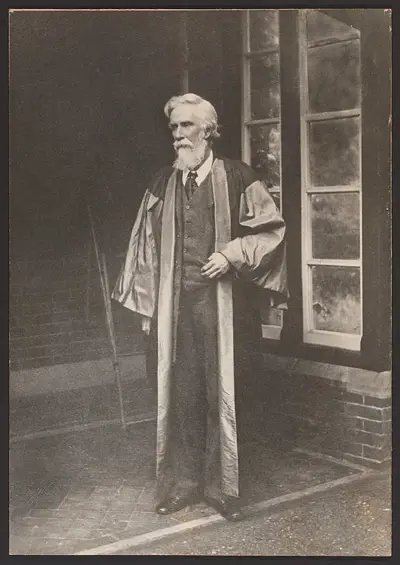
Albert Venn Dicey KC FBA (1835–1922), usually cited as A. V. Dicey, was a British Whig jurist and constitutional theorist. He is most widely known as the author of Introduction to the Study of the Law of the Constitution (1885). The principles it expounds are considered part of the uncodified British constitution. He became Vinerian Professor of English Law at Oxford, one of the first Professors of Law at the London School of Economics, and a leading constitutional scholar of his day. Dicey popularised the phrase "rule of law", although its use goes back to the 17th century.
