David Souter Quotes
Determination by the legislature of what constitutes proper exercise of police power is not final or conclusive. It is subject to supervision by the courts.
David Souter, U. S. Supreme Court Justice, Concurring Opinion, Washington v. Glucksberg, 1997
Sourced by: Eigen's Political and Historical Quotations

See John Marshall's later (1803) use of the concept and term "repugnant." {606483}


Hatch was the chairman of the Senate Judiciary Committee at the time.

Marshall did not crate this concept or some its phraseology out of whole cloth. See Rufus King {610245} for a Constitutional Convention basis for the statement.

One of the conundrums of our constitutional system is who has the last word as to what the Constitution means. Essentially it is the judicial branch headed by the Supreme Court. But there are those who believe that the current popular majority should have a say in what is or is not constitutional. If so the legislative branch should have the last word. Still others say that the President is the only person elected by ALL the people, so his opinion most reflects the will of the public. And then there are most who argue that the Constitutional system was created just to avoid the power of currently popular majorities, and the courts should decide based on the Constitution itself. So the statement has very little meaning except that Phillips thinks that the courts have too much power. Whoever gets to decide what is or is not Constitutional will be accused of being “over” the Constitution by those who don’t like the decisions. In our system, that is the courts.
Marshall is famous for, as Chief Justice, establishing the principle that the Judiciary can override Congress and the Executive in determining Constitutionality. However, as this quotation illustrates this principle had been discussed in open debate on the ratification of the Constitution. It was not simply a grab for power by a Chief justice; he uttered this quotation long before he ever suspected he would be a judge but actually spent much of his career in the executive and legislative branch of government.

Barstow the Democratic Governor who had no serious opposition in 1853 found himself challenged for reelection by Coles Bashford of the new Republican Party. The Board of Canvassers reported that Governor Barstow had won reelection but by less than 200 votes in the whole state. The Republicans charged that there had been fraud in some of the rural districts and petitioned the Wisconsin Supreme Court which ruled that nonexistent precincts had indeed voted for the Governor. The Barstow forces however refused to recognize the decisions of the court claiming that the court had no jurisdiction over the Board of Canvassers who were part of the executive branch. The Republicans held their own inauguration and two men claimed to be Governor. But the Governor claimed that the state constitution did not give the court any authority to deal with the crisis, He even called out the State Militia to maintain his office and intimidate the Supreme Court and keep the “other governor” from the state house. Nonetheless the court ruled that even the Governor had to obey the law and the Supreme Court would determine what the law was. Barstow finally “resigned.” See {587915} & {587914}.


Jefferson’s fears were later reinforced by John Marshall in Marbury v. Madison {606468}

Though not very dramatic or succinct, this is a very important quotation in American History. The original drafters of the Constitution concentrated on limiting the powers of the executive—the role of the King. But the Congress had no limits placed on them. In Britain, to this day, the Parliament can do whatever they wish as there is no restraint on them other than their prudence and reasonableness. Madison used the example of the Alien and Sedition Acts—huge infringements on the rights of Americans—to show why the legislative branch must also be more restrained and limited. And that was the logic behind adding the Bill of Rights to our Constitutions.


President Abraham Lincoln had pocket vetoed his own party's reconstruction bill in the midst of an election year.


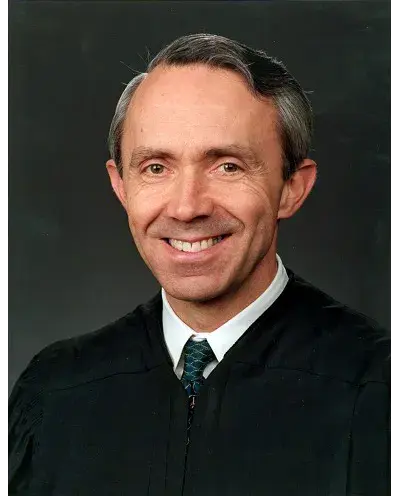
David Hackett Souter is a retired Associate Justice of the Supreme Court of the United States. He served from October 1990 to his retirement in June 2009. Appointed by US President George H. W. Bush to fill the seat that had been vacated by William J. Brennan Jr., Souter sat on both the Rehnquist and the Roberts Courts.
