Olin Johnson Quotes
My wife and I might be seated beside a Nigra.
Explaining to reporters why he would not attend a dinner where President Truman was to be the guest of honor:
Olin Johnston, 1896-1965, U. S. Senator (Democrat, SC), Governor of South Carolina, 1948
Sourced by: Eigen's Political and Historical Quotations


Theodore Roosevelt, became President when President McKinley was assassinated. One thing that he did was to have the Negro leader, Booker T. Washington to lunch at the White House. He had previously had Blacks in his famous Rough Riders. Although Roosevelt had not taken a public position in inter-racial marriage, in the South, and much of rest of the country, accusing someone of favoring miscegenation was as serious an insult as there was. The accusation was used to attack anyone who did not favor segregation, lynching and Jim Crow in the same way that people who favored Medicare or Labor Unions were called “communists”. Cardamon himself was the target of many for his disrespectful and gross description of the president. See Quotation

Forrest went on to be the first National Leader of the Terrorist Organzation.

Virginia never did recognize interracial marriage in its own. A Supreme Court ruling invalidated their law.


Racism was so rampant in America that even after Blacks had won elections to Congress, they would be discriminated against even in Washington DC.


This painting depicted a young black girl walking to school surrounded by 4 U. S. Marshalls protecting her from the crowd of white racists trying to prevent her from attending an elementary school under court order. The vicious race hatred that school integration revealed was the national problem that was then surfacing. The graphic is the illustration that appeared in Look with that name.

She was one of the first prominent white southerners to denounce racial segregation.

Bilbo was one of the worst racists who ever served in the Congress.


In that year he resigned from the War Department in protest of the discrimination and racism in the armed forces.

Reconstruction was the period in the South after the Civil War. The change that emancipation brought to the white South was traumatic, and there was a constant struggle between those who wanted the Blacks to be integrated into Southern Society—and those Southerners who wanted to create a society that would be as close to slavery as possible, So the Klu Klux Klan and other terrorist organizations formed and with lynching and other intimidation, much of the initial progress of Reconstruction was rolled back and did not get reinstated until the Civil Rights and Voting Rights Acts were passed in 1964.

The Birth of a Nation was screened at the Woodrow Wilson White House as Wilson was the most racist president since Andrew Johnson. The editorial was persuasive to Boston liberals who were not prepared to impose censorship even to prevent racist propaganda from having an audience.


Interestingly, before 1705, there was no legislative prohibition against Indians and Free Negroes being full citizens including holding public office and voting. This act prohibited them from holding public office, but did not prohibit them from Voting provided they met the general voting requirement of being a landholder. However, 18 years later, voting by these minorities was no longer allowed. See Quotation 643588.

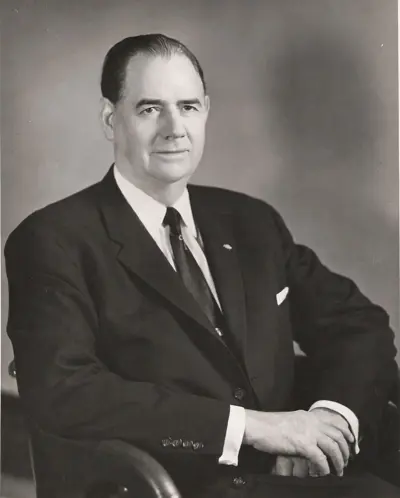
Olin DeWitt Talmadge Johnston was a Democratic Party politician from the US state of South Carolina. He served as the 98th governor of South Carolina, 1935–1939 and 1943–1945, and represented the state in the United States Senate from 1945 until his death from pneumonia in Columbia, South Carolina in 1965. He has become infamously well-known for denying clemency to George Stinney, a 14 year-old African-American boy who was sentenced to death in 1944 after a trial that lasted for one single day, a conviction overturned 70 years later.
