James O. Eastland Quotes
The Southern institution of racial segregation or racial separation was the correct, self-evident truth which arose from the chaos and confusion of the Reconstruction period. Separation promotes racial harmony. It permits each race to follow its own pursuits, and its own civilization. Segregation is not discrimination
Reconstruction was the period in the South after the Civil War. The change that emancipation brought to the white South was traumatic, and there was a constant struggle between those who wanted the Blacks to be integrated into Southern Society—and those Southerners who wanted to create a society that would be as close to slavery as possible, So the Klu Klux Klan and other terrorist organizations formed and with lynching and other intimidation, much of the initial progress of Reconstruction was rolled back and did not get reinstated until the Civil Rights and Voting Rights Acts were passed in 1964.
James O. Eastland, U. S. Senator (Democrat, MS), Senate Debate on Desegregation
Sourced by: Eigen's Political and Historical Quotations


Vladimir Lenin. In their quest for world revolution, the Russian Communists had more problems with arguments in the United States whose reforms and economy had produced a very high standard of living. They knew that to effect a revolution, they had to reach the middle class and the intellectuals. They had little economically to attack America with but they were able to attack the United States morally. Even though segregation was legal in America at that time, many Americans thought it immoral. Most of the rest of the world did also. So that was one of the attack points. Since the communists opposed U. S. racial segregation, many Southern segregationists used a perverted logic and accused everyone who opposed segregation of being a communist. In addition to racial segregation, the Communists attacked other forms of discrimination such as anti-Catholic, anti-Asian, and anti-Semitic (See {638737} ) behavior.

The statement was made even more dramatic as the outgoing Governor, Lester Mattox, standing behind Carter at the ceremony, was an arch segregationist.


Blacks were fighting and dying in WWII. They were equal when they were under fire, but otherwise not. The war was against fascist protagonists whose creed was inequality while the allies were upholding freedom and equality. But making that aspiration a reality was difficult.

This widely publicized statement by Mr. Ethridge was made when he was a member of the President's Committee on Fair Employment Practices during the hearings of this Committee at Birmingham, Alabama.

Wilson, a history and government professor and college president before politics, was has been accused of being one of the most racist Presidents since Reconstruction. Prior to his Presidency, the Federal Government had been making steady progress in hiring African Americans. Under Wilson there was a wholesale firing of a large proportion of them. Some apologists argue that his League of Nations and other major aspirations required the votes and cooperation of Southern Senators who insisted that many of the blacks be terminated. At the same time, the KKK was near the zenith of its membership and political power and was an intimidating force. Wilson’s home state of New Jersey not only had a large KKK membership but there were lynching of Blacks in his own state and when Governor and President he never asked for any anti-lynching legislation.


Moynihan was actually not the political originator of the "benign neglect" phrase which became so controversial. It had been first used by The Earl of Durham in his 1839 Durham Report on the English policy towards Canada.
This was art of the Nixon "Southern Strategy" to alienate the white supremacists and racists from the Democratic Party with Civil Rights legislation and rhetoric, and get most of them to become Republicans. But as Phillips observed, when Negroes began voting in significant numbers in the South the party switching really accelerated.

Referring to Montgomery Alabama in 1950.

This painting depicted a young black girl walking to school surrounded by 4 U. S. Marshalls protecting her from the crowd of white racists trying to prevent her from attending an elementary school under court order. The vicious race hatred that school integration revealed was the national problem that was then surfacing. The graphic is the illustration that appeared in Look with that name.


The President had frequent stag (men only) dinners of national notables. At this dinner, the Chief Justice was seated close to the attorney who was representing the Southern segregationists in the Brown v Board of Education case that was before the court. Warren had objected to being in such close proximity to one party to a case before the court. Eisenhower, had taken Warren aside to smooth any bad feelings and thinking Warren might be distressed by the attorney’s racist and segregationist views tried to explain the Southern point of view. Although Eisenhower was not a racist or segregationist himself, he had worked closely with Southerners his whole career, and thought he understood them. Warren was so surprised by the President’s insensitive remark, that he noted it and revealed it in his memoirs.


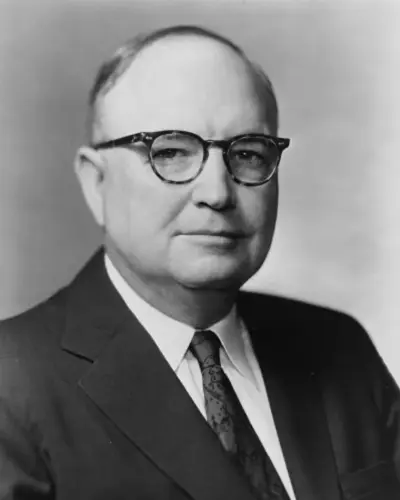
James Oliver Eastland was an American politician from the state of Mississippi who served in the United States Senate as a Senator in 1941; and again from 1943 until his resignation on December 27, 1978. He has been called the "Voice of the White South" and the "Godfather of Mississippi Politics." A Democrat, Eastland was known as the symbol of Southern resistance to racial integration during the civil rights era, often speaking of blacks as "an inferior race."
