Harold Nicholas Quotes
If you were black, you experienced prejudice. It wasn't a real horrible thing for us; we went through it. We noticed it mostly in the South and in Las Vegas, where we couldn't stay in the hotels where we entertained. But that began to change.
Oliver, Myrna. "Harold Nicholas; Half of Legendary Tap-Dancing Duo." Los Angeles Times, 4 July 2000.


Reconstruction was the period in the South after the Civil War. The change that emancipation brought to the white South was traumatic, and there was a constant struggle between those who wanted the Blacks to be integrated into Southern Society—and those Southerners who wanted to create a society that would be as close to slavery as possible, So the Klu Klux Klan and other terrorist organizations formed and with lynching and other intimidation, much of the initial progress of Reconstruction was rolled back and did not get reinstated until the Civil Rights and Voting Rights Acts were passed in 1964.


Justice Marshall, in he early career played an extremely important role in the development of the law vis a vis race and discrimination in America. He went from town to town in the Jim Crow, segregated South filing and often winning civil rights lawsuits. This was an era where lynching was still prevalent, and he was often threatened with bodily harm or death. Justice Ginsberg who also had been a leader in filing and winning civil rights suits but she worked in the area of women’s rights. The host had stated that she and Marshall were the great legal pioneers in civil rights litigation. Ginsberg explained that she hers was a much easier role and Marshall should receive much more credit. This was her reason.


The statement was made even more dramatic as the outgoing Governor, Lester Mattox, standing behind Carter at the ceremony, was an arch segregationist.


The President was asking for passage of his Voting Rights Bill.

“FHA” was the Federal Housing Administration. This federal agency de facto controlled the vast majority of the mortgage loans in America. The agency, under the control of racists, redlined black neighborhoods from obtaining mortgages and even worse discouraged mortgage loans even in affluent white areas if it was an affluent Negro family that wanted to buy a house there. {637259} and {637260} are quotations which are examples of FHA racist policies.


Blacks were fighting and dying in WWII. They were equal when they were under fire, but otherwise not. The war was against fascist protagonists whose creed was inequality while the allies were upholding freedom and equality. But making that aspiration a reality was difficult.

Vladimir Lenin. In their quest for world revolution, the Russian Communists had more problems with arguments in the United States whose reforms and economy had produced a very high standard of living. They knew that to effect a revolution, they had to reach the middle class and the intellectuals. They had little economically to attack America with but they were able to attack the United States morally. Even though segregation was legal in America at that time, many Americans thought it immoral. Most of the rest of the world did also. So that was one of the attack points. Since the communists opposed U. S. racial segregation, many Southern segregationists used a perverted logic and accused everyone who opposed segregation of being a communist. In addition to racial segregation, the Communists attacked other forms of discrimination such as anti-Catholic, anti-Asian, and anti-Semitic (See {638737} ) behavior.

There has never been any scientific evidence suggesting that racism per se is “hard-wired” or genetic in any way. However, there data about the hard-wiring of comfort with the familiar as opposed to the unfamiliar-the different for which most mammalian species become more assertive, aggressive and defensive.

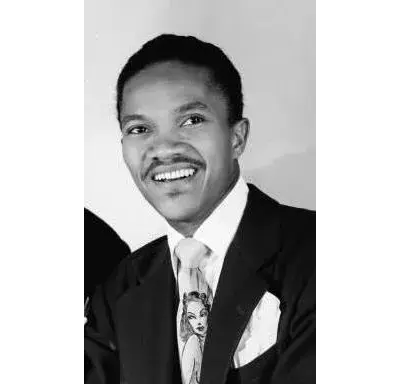
Harold Lloyd Nicholas was an American dancer specializing in tap. Nicholas was the younger half of the tap-dancing pair the Nicholas Brothers, known as two of the world's greatest dancers. His older brother was Fayard Nicholas. Nicholas starred in the MGM musicals An All-Colored Vaudeville Show (1935), Stormy Weather (1943), The Pirate (1948). and The Five Heartbeats (1991).
